Lesson 22 of 50 · 写真を撮った 人・待っている 人 · みんなの日本語 第22課 · N5
Story voice: 〜 N3–N2 Japanese — above this lesson’s level, on purpose. Your target is the Key Sentences.
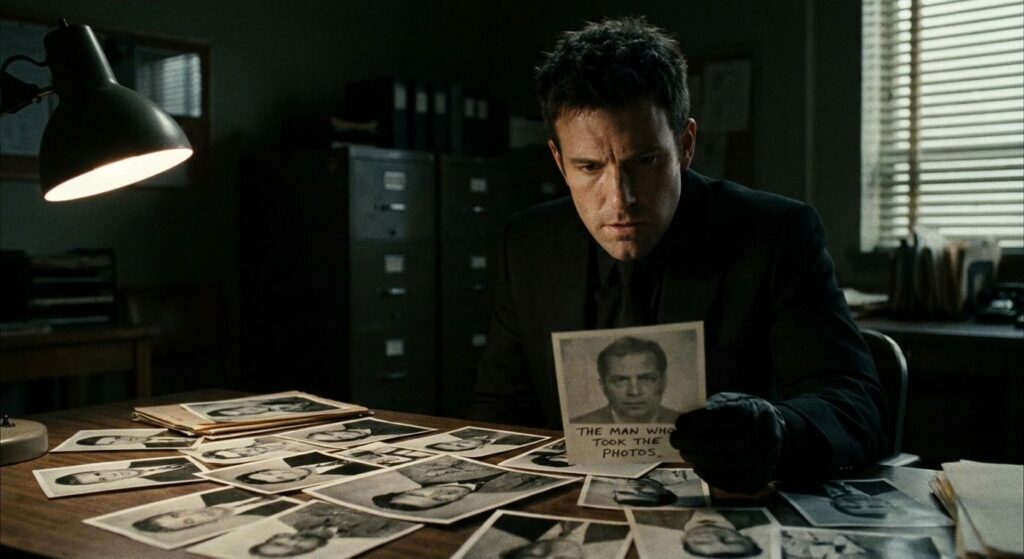
Episode 22: The Man Who
Mini Story
Description is a spy’s blade. Not “the man” — “the man who took the photographs.” Not “the room” — “the room where the meeting was held.” To name a person precisely is to mark them.描写,是间谍的刀刃。不是「那个男人」,而是「拍了照片的那个男人」。不是「那个房间」,而是「开过会的那个房间」。精确地叫出一个人,就是给那个人做上记号。描寫,是間諜的刀刃。不是「那個男人」,而是「拍了照片的那個男人」。不是「那個房間」,而是「開過會的那個房間」。精確地叫出一個人,就是給那個人做上記號。Miêu tả là lưỡi dao của điệp viên. Không phải “người đàn ông” — mà là “người đàn ông đã chụp những bức ảnh”. Không phải “căn phòng” — mà là “căn phòng nơi cuộc họp diễn ra”. Gọi tên một người thật chính xác, tức là đánh dấu người đó.
描写は、 スパイ の刃。 ただの「男」 ではなく「写真を撮った男」。 ただの「部屋」 ではなく「会議が行われた部屋」。 人を正確に名指すことは、 その人を印付けること。
A call from an old colleague. A question about a face in a recent file.一个旧同事打来电话。问的是最近一份档案里的一张脸。一個舊同事打來電話。問的是最近一份檔案裡的一張臉。Một cuộc gọi từ đồng nghiệp cũ. Câu hỏi về một gương mặt trong hồ sơ gần đây.
昔の同僚から、 電話。 最近のファイルの顔について、 質問が。
写真を 撮った 男の人を 知って いますか?
Through the one-way mirror, Mike watches a figure sitting alone. The handler wants an identification.隔着单向玻璃,麦克看着一个独自坐着的人影。上级要他辨认。隔著單向玻璃,麥克看著一個獨自坐著的人影。上級要他辨認。Qua tấm gương một chiều, Mike nhìn một bóng người ngồi một mình. Người chỉ huy muốn anh nhận diện.
マジックミラー越しに、 マイクは一人で座る人物を見る。 ハンドラー は、 同定を求める。
あの 部屋で 待って いる 人は 誰ですか?
On the table, today’s harvest. Eight photographs. Each means something different. One means everything.桌上,是今天的收获。八张照片。每一张的意义都不同。有一张,意味着一切。桌上,是今天的收穫。八張照片。每一張的意義都不同。有一張,意味著一切。Trên bàn, thành quả hôm nay. Tám tấm ảnh. Mỗi tấm mang một ý nghĩa khác nhau. Có một tấm, mang ý nghĩa của tất cả.
テーブル の上、 今日の収穫。 8 枚の写真。 それぞれが、 違うことを意味する。 一枚は、 すべてを意味する。
マイクが 撮った 写真は 大切です。
The corridor lights go out. Mike thinks of the friend who left this life. Who got out — and lives now without secrets.走廊的灯灭了。麦克想起那个离开了这种生活的朋友。脱身了,如今活得没有秘密。走廊的燈滅了。麥克想起那個離開了這種生活的朋友。脫身了,如今活得沒有祕密。Đèn hành lang tắt. Mike nghĩ về người bạn đã rời bỏ cuộc sống này. Đã thoát ra — và giờ sống không còn bí mật nào.
廊下の灯りが消える。 マイクは思う ── この生活を去った友のことを。 抜け出し、 今は秘密なしで生きている友のことを。
仕事を やめた 友達に 会いたいです。
Key Sentences
note 「が」 inside the clause.
1. V-た N (the man who did X)
写真を 撮った 男の人を 知って いますか?
- Do you know the man who took the photos?
- 你知道拍照的那个男人吗? / 你知道拍照的那個男人嗎?
- Bạn có biết người đàn ông đã chụp ảnh không?
2. V-て いる N (the person who is V-ing)
あの 部屋で 待って いる 人は 誰ですか?
- Who is the person waiting in that room?
- 在那个房间等着的人是谁? / 在那個房間等著的人是誰?
- Người đang chờ trong phòng đó là ai?
3. N1 が V-た N2 (the photos N1 took)
マイクが 撮った 写真は 大切です。
- The photos Mike took are important.
- 麦克拍的照片很重要。 / 麥克拍的照片很重要。
- Ảnh mà Mike chụp rất quan trọng.
4. V-た N に 会いたい (want to meet the X who)
仕事を やめた 友達に 会いたいです。
- I want to meet the friend who quit work.
- 我想见辞职的朋友。 / 我想見辭職的朋友。
- Tôi muốn gặp người bạn đã nghỉ việc.
Practice out loud
Say the answer before you look. The same sentences you just read — now from your own mouth.
写真を 撮った 男の人を 知って いますか。
はい、知って います。
あの 部屋で 待って いる 人は だれですか。
マイクの 友達です。
眼鏡を かけて いる 人は マイクですか。
いいえ、マイクじゃありません。帽子を かぶって いる 人が マイクです。
マイクは だれに 会いたいですか。
仕事を やめた 友達に 会いたいです。
あなたが 生まれた 町は どこですか。
your own answer
今 着て いる シャツは どこで 買いましたか。
your own answer
Green — HQ asks you. Blue — Mike answers. Dashed — your turn.
Vocabulary
| 日本語 | English | 简体 | 繁體 | Tiếng Việt |
|---|---|---|---|---|
| 普通形 + N 写真を 撮った 男の人を 知って いますか。 | noun-modifying clause Do you know the man who took the photos? | 修饰名词的句子 你认识拍照片的那个男人吗? | 修飾名詞的句子 你認識拍照片的那個男人嗎? | mệnh đề bổ nghĩa Bạn có biết người đàn ông đã chụp những tấm ảnh không? |
| 知って いる あの 部屋に いる 人を 知って います。 | know (state) I know the person in that room. | 知道 我认识那个房间里的人。 | 知道 我認識那個房間裡的人。 | biết Tôi biết người ở trong phòng đó. |
| 知らない わたしが 知らない 人です。 | do not know It is someone I don't know. | 不知道 是我不认识的人。 | 不知道 是我不認識的人。 | không biết Đó là người tôi không biết. |
| 住んで いる 京都に 住んで いる 人ですか。 | live in (state) Is he the person living in Kyoto? | 住 是住在京都的那个人吗? | 住 是住在京都的那個人嗎? | sống Có phải là người sống ở Kyoto không? |
| 働いて いる 銀行で 働いて いる 友達です。 | work at (state) It's my friend who works at a bank. | 工作 是在银行工作的朋友。 | 工作 是在銀行工作的朋友。 | làm việc Là người bạn làm việc ở ngân hàng. |
| 会います 仕事を やめた 友達に 会いたいです。 | meet I want to see the friend who quit her job. | 见 我想见那个辞了职的朋友。 | 見 我想見那個辭了職的朋友。 | gặp Tôi muốn gặp người bạn đã nghỉ việc. |
| 生まれます わたしが 生まれた 町は 小さいです。 | be born The town where I was born is small. | 出生 我出生的城市很小。 | 出生 我出生的城市很小。 | sinh ra Thị trấn nơi tôi sinh ra thì nhỏ. |
| 育ちます わたしが 育った 町は 静かでした。 | grow up The town where I grew up was quiet. | 长大 我长大的城市很安静。 | 長大 我長大的城市很安靜。 | lớn lên Thị trấn nơi tôi lớn lên rất yên tĩnh. |
| 大切 マイクが 撮った 写真は 大切です。 | important The photos Mike took are precious. | 重要 麦克拍的照片很重要。 | 重要 麥克拍的照片很重要。 | quan trọng Những tấm ảnh Mike chụp rất quý. |
| 場所 ここは 大切な 場所です。 | place This is an important place. | 地方 这是个重要的地方。 | 地方 這是個重要的地方。 | nơi Đây là nơi quan trọng. |
| 時間 友達と 会う 時間を 教えてください。 | time Please tell me the time we're meeting. | 时间 请告诉我见面的时间。 | 時間 請告訴我見面的時間。 | thời gian Xin cho tôi biết giờ gặp nhau. |
Grammar Patterns
V-た / V-る / V-て いる + N
Use plain form verb directly before a noun to describe it. No の between them.
N1 が V-た N2
If the verb has a subject, mark it with 「が」 inside the clause — NOT 「は」.
い-adj + N / な-adj な + N (review)
Adjectives can be the modifier too — same direct attachment for い-adj, add な for な-adj.
Modified noun = subject / object
The modified noun can be the subject or object of the main sentence. 「マイクが 撮った 写真は ...」 = the photos (object of took) ARE the subject of the main clause.
Grammar Picture
- 名詞noun名词danh từ
- 述語sentence ending句尾句尾phần cuối câu
が, not は, inside the clause
This is the most common mistake. Inside a noun-modifying clause, the subject of the inner clause MUST take 「が」.
- OK: マイクが 撮った 写真 = the photos Mike took
- NOT OK: マイクは 撮った 写真 (wrong — は is for the outer topic, not inside the clause)
Outside the clause (main sentence topic), 「は」 returns:
マイクが 撮った 写真は 大切です。 = The photos Mike took ARE important.
Verb tense in the modifier
The tense in the modifying clause is independent of the main sentence:
- 写真を 撮った 男の人を 知って います。 = (I) know the man who took photos. (past + present)
- 写真を 撮る 男の人を 知って います。 = (I) know the man who takes photos. (present + present)
- 写真を 撮って いる 男の人を 知って います。 = (I) know the man who is taking photos. (progressive + present)
Adjective + noun is the same pattern
The same direct attachment used for adjectives + noun (L8) extends to clauses + noun.
- 大きい カメラ (い-adj + N)
- 静かな 部屋 (な-adj + N)
- マイクが 撮った 写真 (clause + N)
One unified rule: in Japanese, modifiers come BEFORE the noun they describe. No relative pronouns ('that', 'which', 'who'). Just stack them.
Roleplay Practice
describe 5 things around you with modifier clauses.
Scene: A colleague asks Mike to identify someone in a photo.
Colleague: マイク、 きのう 会った 男の人を 知って いますか?
(Mike, do you know the man we met yesterday?)
Mike: はい、 知って います。 写真を 撮った 人ですね。
(Yes, I know him. He is the one who took the photos, right?)
Colleague: 京都に 住んで いる 人ですか?
(Is he the person living in Kyoto?)
Mike: はい、 そうです。
(Yes, that is right.)
How do you say this in Japanese?
Q1. Which is correct: 'the man who took photos'?
- A. 写真を 撮った 男の人
- B. 写真を 撮ったの 男の人
- C. 写真を 撮る 男の人
Show answer
✓ A. Plain form directly before the noun. No の.
Q2. Inside a noun-modifying clause, the subject takes:
- A. は
- B. が
- C. を
Show answer
✓ B. が
「マイクが 撮った 写真」 — が inside the clause.
Q3. 「待って いる 人」 means:
- A. the person who waited
- B. the person who is waiting
- C. the person who will wait
Show answer
✓ B. V-て いる N = the N who is V-ing.
Q4. In the Mini Story, the friend Mike wants to meet:
- A. lives in Kyoto
- B. quit the (spy) work
- C. is dead
Show answer
✓ B. quit the work
「仕事を やめた 友達」 = the friend who quit work.
Q5. Write: Describe a person you know using a noun-modifying clause.
Try V-た N or V-て いる N.
Show answer
Samples:
- 日本語を 教えて いる 先生 (the teacher who teaches Japanese)
- 京都に 住んで いる 友達 (the friend who lives in Kyoto)
How to Use This Lesson
Read the sections in the order they appear. About 40 minutes.
Tomorrow, come back and say the Key Sentences again — that is where it sticks.
For Teachers
For Teachers (45-60 minutes in class)
- Warm-up (5 min): Identify people in a photo: 「眼鏡を かけて いる 人」「コーヒーを 飲んで いる 人」.
- が drill (10 min): Convert は to が when inside a relative clause. Highlight this rule.
- Stacking practice (10 min): Take two simple sentences and merge into one with a modifier clause.
- Description chain (10 min): One student names a thing; next adds a modifier; next stacks another. Build longer phrases.
- Roleplay (15 min): Police identification / dating site profile — practice descriptions.
- Check Yourself (5-10 min).
Common pitfall: 「マイクは 撮った 写真」 — wrong. Reinforce「が」 inside the clause.
← Lesson 21 | Midnight Encounter | Lesson 23 →
“Minna no Nihongo” (みんなの日本語) is a textbook series by 3A Corporation. Cinema にほんご is an independent site, not affiliated with or endorsed by 3A Corporation — lesson numbers indicate correspondence only, and no textbook text is reproduced here.