
Lesson 23 of 50 · 〜とき・〜と · みんなの日本語 第23課 · N5
Story voice: 〜 N3–N2 Japanese — above this lesson’s level, on purpose. Your target is the Key Sentences.
Episode 23: When the City Wakes
Mini Story
Time is a spy’s second weapon. When the city wakes, he sleeps. Long ago, while the other children slept, he dreamed of becoming what he is now. Each 「とき」 frames a different self.时间,是间谍的第二件武器。城市醒来时,他睡。很久以前,别的孩子睡着的时候,他梦见自己成为现在的样子。每一个「とき」,框出一个不同的自己。時間,是間諜的第二件武器。城市醒來時,他睡。很久以前,別的孩子睡著的時候,他夢見自己成為現在的樣子。每一個「とき」,框出一個不同的自己。Thời gian là vũ khí thứ hai của điệp viên. Khi thành phố thức dậy, anh ngủ. Ngày xưa, khi những đứa trẻ khác say giấc, anh mơ mình trở thành con người của bây giờ. Mỗi chữ 「とき」 viền lấy một cái tôi khác nhau.
時間は、 スパイ の第二の武器。 街が目覚めるとき、 彼は眠る。 過去の子供たちが眠っていた頃、 彼は今の自分になることを夢見ていた。 それぞれの「とき」 が、 異なる自分を縁取る。
The night shift runs in reverse. While Tokyo sits down to breakfast, Mike draws the blackout curtains.夜班是反着跑的。东京吃早饭的时候,麦克拉上遮光窗帘。夜班是反著跑的。東京吃早餐的時候,麥克拉上遮光窗簾。Ca đêm chạy ngược chiều. Khi Tokyo ngồi vào bữa sáng, Mike kéo tấm rèm chắn sáng.
夜勤は、 逆を走る。 東京が朝食をとる頃、 マイクは遮光カーテンを引く。
マイクが 寝る とき、 街は 起きて いる。
At twelve, he read about a spy for the first time, in a paperback. The longing started early.十二岁那年,他第一次在一本平装书里读到间谍。向往,从很早就开始了。十二歲那年,他第一次在一本平裝書裡讀到間諜。嚮往,從很早就開始了。Năm mười hai tuổi, lần đầu tiên anh đọc về điệp viên, trong một cuốn sách bìa mềm. Niềm khao khát bắt đầu từ rất sớm.
12 歳のとき、 ペーパーバック で初めて スパイ について読んだ。 憧れは、 早くから始まっていた。
子供の とき、 マイクは スパイに なりたかったです。
Footage from the station camera replays on his screen. A familiar rhythm — leave the building, look up, and the weather has changed.车站摄像头的影像在屏幕上回放。熟悉的节奏——走出大楼,抬头,天气变了。車站攝影機的影像在螢幕上回放。熟悉的節奏——走出大樓,抬頭,天氣變了。Đoạn phim từ camera nhà ga phát lại trên màn hình. Một nhịp điệu quen thuộc — bước ra khỏi toà nhà, ngẩng đầu, và thời tiết đã đổi.
駅の カメラ の footage が、 画面で再生される。 馴染みの リズム ── 建物を出る、 見上げる、 天気が変わる。
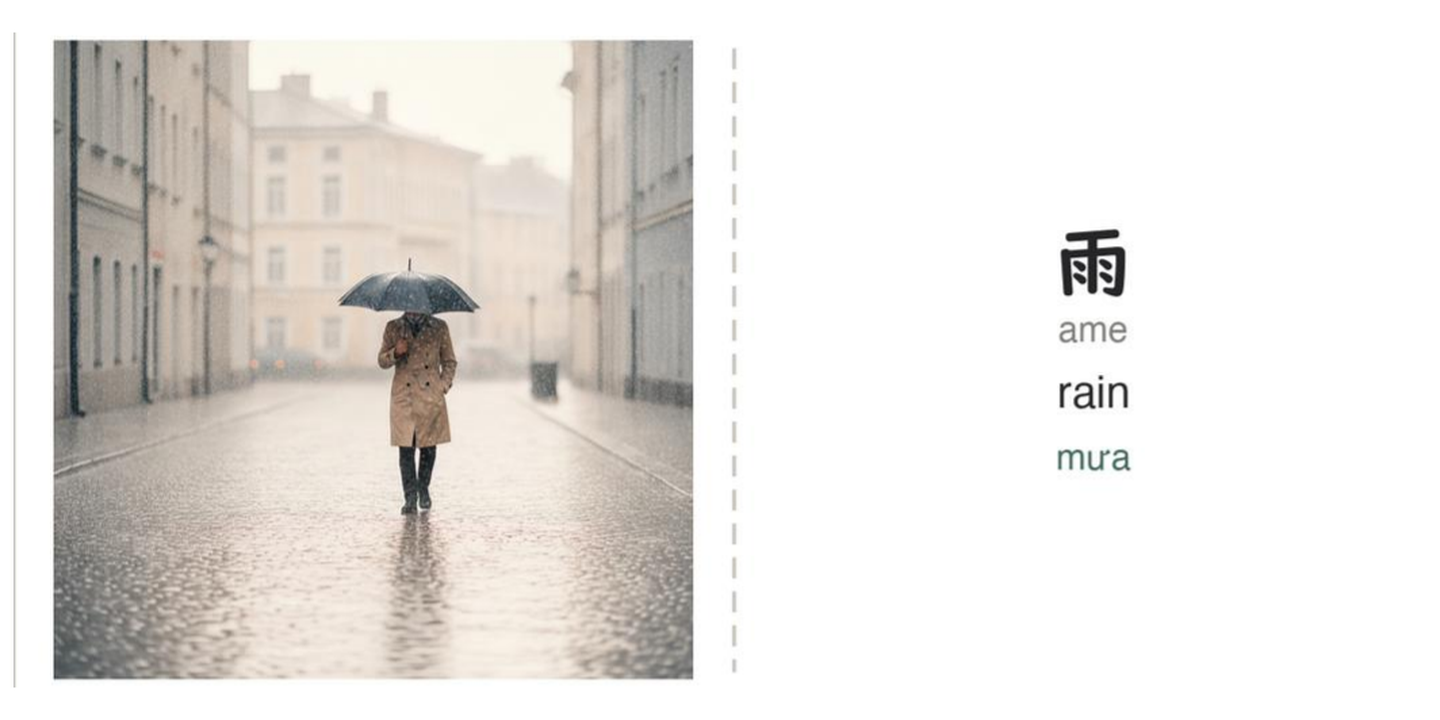
駅を 出ると、 雨が 降って いました。
And when this mission ends — truly ends — there is one place he wants to go. Quiet, ancient, full of old temples and softer voices.而当这次任务结束——真正结束的时候——他想去的地方,只有一个。安静,古老,满是古寺和更柔和的声音。而當這次任務結束——真正結束的時候——他想去的地方,只有一個。安靜,古老,滿是古寺和更柔和的聲音。Và khi nhiệm vụ này kết thúc — kết thúc thật sự — có một nơi anh muốn đến. Yên tĩnh, cổ kính, đầy những ngôi chùa xưa và những giọng nói dịu dàng hơn.
そしてこの ミッション が終わったとき ── 本当に終わったとき ── 行きたい場所が、 ひとつ。 静かで、 古く、 古寺と柔らかな声に満ちた場所。
仕事が 終わる とき、 マイクは 京都に 行きます。
Chapter 2: Schedules and Hidden Truths →
Key Sentences
1. V-る とき (when V-ing)
マイクが 寝る とき、 街は 起きて いる。
- When Mike sleeps, the city is awake.
- 麦克睡觉的时候,城市醒着。 / 麥克睡覺的時候,城市醒著。
- Khi Mike ngủ, thành phố thức.
2. N の とき (when as a child)
子供の とき、 マイクは スパイに なりたかったです。
- When (he was) a child, Mike wanted to become a spy.
- 小时候,麦克想成为间谍。 / 小時候,麥克想成為間諜。
- Khi còn nhỏ, Mike muốn trở thành điệp viên.
3. V-る と (whenever)
駅を 出ると、 雨が 降って いました。
- When (he) leaves the station, it was raining.
- 从车站一出来,就下着雨。 / 從車站一出來,就下著雨。
- Khi ra khỏi nhà ga, trời đã mưa.
4. V-る とき (future timing)
仕事が 終わる とき、 マイクは 京都に 行きます。
- When work ends, Mike goes to Kyoto.
- 工作结束的时候,麦克去京都。 / 工作結束的時候,麥克去京都。
- Khi công việc kết thúc, Mike sẽ đi Kyoto.
Practice out loud
Say the answer before you look. The same sentences you just read — now from your own mouth.
マイクが 寝る とき、街は どうですか。
マイクが 寝る とき、街は 起きて います。
子どもの とき、マイクは 何に なりたかったですか。
子どもの とき、スパイに なりたかったです。
駅を 出ると、どうでしたか。
駅を 出ると、雨が 降って いました。
仕事が 始まる とき、京都に 行きますか。
いいえ、始まる ときじゃありません。仕事が 終わる とき、京都に 行きます。
子どもの とき、何に なりたかったですか。
your own answer
道が わからない とき、どう しますか。
your own answer
Green — HQ asks you. Blue — Mike answers. Dashed — your turn.
Vocabulary
| 日本語 | English | 简体 | 繁體 | Tiếng Việt |
|---|---|---|---|---|
| 〜とき 子どもの とき、スパイに なりたかったです。 | when (specific moment) When I was a child, I wanted to be a spy. | ...的时候 小时候我想当间谍。 | ...的時候 小時候我想當間諜。 | khi Hồi nhỏ tôi muốn làm điệp viên. |
| V-る + と 駅を 出ると、雨が 降って いました。 | whenever / when (natural) When I came out of the station, it was raining. | 一 ... 就 一出车站,就在下雨。 | 一 ... 就 一出車站,就在下雨。 | khi/hễ Vừa ra khỏi nhà ga thì trời đang mưa. |
| 寝ます 寝る とき、電気を 消します。 | sleep When I go to bed, I turn off the light. | 睡觉 睡觉的时候我关灯。 | 睡覺 睡覺的時候我關燈。 | ngủ Khi đi ngủ, tôi tắt đèn. |
| 起きます 起きる とき、いつも 寒いです。 | get up, wake up When I get up, it is always cold. | 起床 起床的时候总是很冷。 | 起床 起床的時候總是很冷。 | thức dậy Khi thức dậy, lúc nào trời cũng lạnh. |
| 子供 子供の とき、よく 泳ぎました。 | child When I was a child, I swam a lot. | 小孩 小时候我常常游泳。 | 小孩 小時候我常常游泳。 | trẻ con Hồi nhỏ tôi hay đi bơi. |
| 大人 部屋に 大人と 子供が います。 | adult There is an adult and a child in the room. | 大人 房间里有一个大人和一个小孩。 | 大人 房間裡有一個大人和一個小孩。 | người lớn Trong phòng có một người lớn và một đứa trẻ. |
| 若い 若い とき、よく 遊びました。 | young When I was young, I went out a lot. | 年轻 年轻的时候我常常出去玩。 | 年輕 年輕的時候我常常出去玩。 | trẻ Hồi trẻ tôi hay đi chơi. |
| 暇 暇な とき、写真を 撮ります。 | free (time) When I have free time, I take photos. | 空闲 有空的时候我拍照。 | 空閒 有空的時候我拍照。 | rảnh Khi rảnh, tôi chụp ảnh. |
| 忙しい 忙しい とき、昼ごはんを 食べません。 | busy When I'm busy, I don't eat lunch. | 忙 忙的时候我不吃午饭。 | 忙 忙的時候我不吃午餐。 | bận Khi bận, tôi không ăn trưa. |
| 天気 天気が いい とき、駅まで 歩いて 行きます。 | weather When the weather is good, I walk to the station. | 天气 天气好的时候,我走路去车站。 | 天氣 天氣好的時候,我走路去車站。 | thời tiết Khi thời tiết đẹp, tôi đi bộ đến nhà ga. |
| 道 この 道を まっすぐ 行ってください。 | road, way Please go straight along this road. | 路 请沿这条路一直走。 | 路 請沿這條路一直走。 | đường Xin đi thẳng theo con đường này. |
| まっすぐ まっすぐ 行くと、駅が あります。 | straight Go straight, and you'll find the station. | 直 一直走就会看到车站。 | 直 一直走就會看到車站。 | thẳng Cứ đi thẳng là thấy nhà ga. |
Grammar Patterns
plain + とき、 main clause
Specify a moment in time. Use plain form before とき.
V-た + とき (after)
If the action of the とき-clause is COMPLETED before the main clause, use the た-form.
V-る + と、 result
Whenever V happens, result follows naturally. Used for habits, facts, directions.
N の + とき / な-adj + な + とき / い-adj + とき
For nouns and adjectives, attach with の (noun), な (な-adj), or directly (い-adj).
Grammar Picture
- 名詞noun名词danh từ
- 助詞particle助词trợ từ
- 述語sentence ending句尾句尾phần cuối câu
V-る とき vs V-た とき — timing matters
The tense of the verb before とき tells WHEN the action happens relative to the main clause:
- V-る とき = before / at the time of V
例: 寝る とき、 電気を 消します。 = (I) turn off the light when going to sleep (before sleeping). - V-た とき = after V
例: 寝た とき、 夢を 見ました。 = (I) had a dream after falling asleep.
〜と vs 〜たら vs 〜ば — conditional family
Japanese has several 'when/if' conditionals:
- 〜と: natural / inevitable result, directions, habits
- 〜たら: 'if/when X happens, then ...' (Lesson 25)
- 〜ば: 'if X' (Lesson 35)
For now: 〜と is for 'X always leads to Y' or 'go straight, then Y'.
Directions with 〜と
「〜と」 is the standard pattern for giving directions:
- まっすぐ 行くと、 右に 駅が あります。 = If you go straight, the station is on your right.
- 左に 曲がると、 銀行が あります。 = Turn left and you will see the bank.
Roleplay Practice
Scene: Mike asks for directions to a small restaurant.
Mike: すみません、 レストランは どこですか?
(Excuse me, where is the restaurant?)
Stranger: この 道を まっすぐ 行くと、 右に あります。
(If you go straight along this road, it will be on your right.)
Mike: 子供の とき、 ここに 住んで いました。 でも、 変わりました。
(When I was a child, I lived here. But things have changed.)
Stranger: そうですね。 時間が 経つと、 町も 変わります。
(That is true. When time passes, towns change too.)
How do you say this in Japanese?
Q1. Which means 'When I was a child'?
- A. 子供は とき
- B. 子供の とき
- C. 子供だ とき
Show answer
✓ B. 子供の とき
Q2. 「寝る とき、 電気を 消します」 means:
- A. (I) turn off the light AFTER going to sleep.
- B. (I) turn off the light BEFORE going to sleep.
- C. (I) sleep WITH the light on.
Show answer
✓ B. BEFORE going to sleep.
V-る とき = at/before that moment.
Q3. Which uses 「〜と」 correctly?
- A. まっすぐ 行くと、 駅が あります。
- B. まっすぐ 行って、 駅が あります。
- C. まっすぐ 行ったら、 駅が あります。
Show answer
✓ A. Use 〜と for natural / direction-style results.
Q4. In the Mini Story, what did Mike want to become when he was a child?
- A. A teacher
- B. A photographer
- C. A spy
Show answer
✓ C. A spy
Q5. Write: One thing you used to do when you were a child.
Try 「子供の とき、 ___ました」.
Show answer
Sample: 子供の とき、 毎日 外で 遊びました。
How to Use This Lesson
Read the sections in the order they appear. About 40 minutes.
Tomorrow, come back — describe 3 childhood memories with 「子供の とき」.
For Teachers
For Teachers (45-60 minutes in class)
- Warm-up (5 min): Childhood share. 「子供の とき、 何が 好きでしたか?」
- とき drill (10 min): Convert 10 'when X' clauses to Japanese, varying noun / verb / adj.
- と direction drill (10 min): Map exercise — give directions with 「まっすぐ 行くと」「左に 曲がると」.
- Timing drill (10 min): V-る とき vs V-た とき — practice with action sequences.
- Roleplay (15 min): Lost tourist — ask and answer directions.
- Check Yourself (5-10 min).
← Lesson 22 | Midnight Encounter | Lesson 24 →
“Minna no Nihongo” (みんなの日本語) is a textbook series by 3A Corporation. Cinema にほんご is an independent site, not affiliated with or endorsed by 3A Corporation — lesson numbers indicate correspondence only, and no textbook text is reproduced here.