Lesson 11 of 50 · 〜枚・〜人・〜時間 · みんなの日本語 第11課 · N5
Story voice: 〜 N3–N2 Japanese — above this lesson’s level, on purpose. Your target is the Key Sentences.
Episode 11: Counting the Cost
Mini Story
notice how numbers carry meaning.
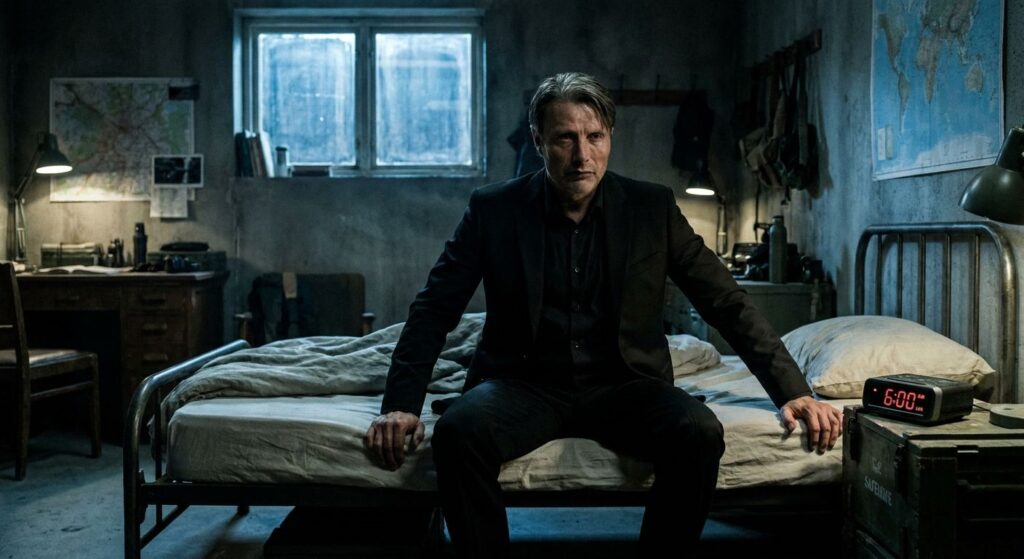
Mike counts. Every spy counts — how many photographs, how many contacts, how many hours of sleep, how many days left. Numbers are the one truth that does not lie.麦克在数。每个间谍都在数——照片有几张,联络人有几个,睡了几个小时,还剩几天。数字,是不会说谎的真实。麥克在數。每個間諜都在數——照片有幾張,聯絡人有幾個,睡了幾個小時,還剩幾天。數字,是不會說謊的真實。Mike đếm. Điệp viên nào cũng đếm — bao nhiêu tấm ảnh, bao nhiêu đầu mối, bao nhiêu giờ ngủ, còn lại bao nhiêu ngày. Những con số là thứ sự thật không biết nói dối.
マイクは数える。 どの スパイ も数える ── 写真の枚数、 コンタクト の数、 睡眠時間、 残された日数。 数字は、 嘘をつかない真実。
He sits at the desk. Spread on it, the morning’s harvest — the building, the entrance, the truck that arrived at 4:05.他在桌前坐下。桌上摊着早晨的收获——那栋楼的照片、入口、4点05分到达的卡车。他在桌前坐下。桌上攤著早晨的收穫——那棟樓的照片、入口、4點05分到達的卡車。Anh ngồi xuống bàn. Trải trên đó là thành quả của buổi sáng — những tấm ảnh toà nhà, lối vào, chiếc xe tải đến lúc 4 giờ 05.
desk に座る。 その上、 朝の収穫 ── 建物の写真、 入口、 4:05 に到着した トラック。
写真が 五枚 あります。
The camera he planted in the empty office saw it clearly. Black suits, careful steps, men without faces.装在空办公室里的那台相机,拍得清清楚楚。黑色西装,谨慎的步子,没有脸的人。裝在空辦公室裡的那台相機,拍得清清楚楚。黑色西裝,謹慎的步子,沒有臉的人。Chiếc máy ảnh gài trong văn phòng trống đã thấy rất rõ. Những bộ vest đen, những bước chân thận trọng, những kẻ không có gương mặt.
空の オフィス に仕掛けた カメラ から、 はっきり見えた。 黒の スーツ、 慎重な歩み、 顔のない者たち。
部屋に 男の人が 二人 います。
His own schedule is merciless. Three hours of sleep. Twenty-one hours awake. The body adapts — or it does not.他自己的日程很残酷。睡三个小时。醒二十一个小时。身体会适应,或者不会。他自己的行程很殘酷。睡三個小時。醒二十一個小時。身體會適應,或者不會。Lịch trình của chính anh thì khắc nghiệt. Ngủ ba tiếng. Thức hai mươi mốt tiếng. Cơ thể hoặc thích nghi, hoặc không.
自分の スケジュール は過酷。 睡眠 3 時間。 起きて 21 時間。 体は順応するか、 しないか。
マイクは 一日に 三時間 寝ます。
In two weeks, the cover expires. Two weeks to finish the work. Two weeks to vanish.再过两个星期,伪装就要失效。两个星期,把工作做完。两个星期,消失。再過兩個星期,偽裝就要失效。兩個星期,把工作做完。兩個星期,消失。Hai tuần nữa, vỏ bọc sẽ hết hạn. Hai tuần, để xong việc. Hai tuần, để biến mất.
あと 2 週間で カバー は失効する。 2 週間で、 仕事を終える。 2 週間で、 消える。
マイクは 二週間 東京に います。
Key Sentences
say each aloud, vary the number.
1. Number + Counter — flat objects (5 photos)
写真が 五枚 あります。
- There are 5 photographs.
- 有5张照片。 / 有5張照片。
- Có 5 tấm ảnh.
2. Number + Counter — people (2 men)
部屋に 男の人が 二人 います。
- There are 2 men in the room.
- 房间里有2个男人。 / 房間裡有2個男人。
- Trong phòng có 2 người đàn ông.
3. Period に Quantity 動詞 — frequency / duration per unit
マイクは 一日に 三時間 寝ます。
- Mike sleeps 3 hours a day.
- 麦克一天睡3个小时。 / 麥克一天睡3個小時。
- Mike ngủ 3 tiếng một ngày.
4. Duration + 場所に います — staying for a period
マイクは 二週間 東京に います。
- Mike is in Tokyo for 2 weeks.
- 麦克在东京2个星期。 / 麥克在東京2個星期。
- Mike ở Tokyo 2 tuần.
Practice out loud
Say the answer before you look. The same sentences you just read — now from your own mouth.
写真が 何枚 ありますか。
写真が 五枚 あります。
部屋に 男の人が 何人 いますか。
男の人が 二人 います。
マイクは 一日に 何時間 寝ますか。
一日に 三時間 寝ます。
マイクは 一週間 東京に いますか。
いいえ、一週間じゃありません。二週間 東京に います。
あなたは 一日に 何時間 寝ますか。
your own answer
兄弟が 何人 いますか。
your own answer
Green — HQ asks you. Blue — Mike answers. Dashed — your turn.
Vocabulary
drill irregular readings (一人 ひとり, 二人 ふたり).
| 日本語 | English | 简体 | 繁體 | Tiếng Việt |
|---|---|---|---|---|
| 〜つ りんごを 三つ 買います。 | general counter (1-10) I will buy three apples. | 个 我买三个苹果。 | 個 我買三個蘋果。 | cái Tôi mua ba quả táo. |
| 〜枚 写真が 五枚 あります。 | flat objects (paper, tickets) There are five photos. | 张 有五张照片。 | 張 有五張照片。 | tờ, tấm Có năm tấm ảnh. |
| 〜本 ペンを 二本 買いました。 | long thin objects (pens, bottles) I bought two pens. | 支 / 瓶 我买了两支笔。 | 支 / 瓶 我買了兩支筆。 | cây, chai Tôi đã mua hai cây bút. |
| 〜人 部屋に 男の人が 二人 います。 | people There are two men in the room. | 人 房间里有两个男人。 | 人 房間裡有兩個男人。 | người Trong phòng có hai người đàn ông. |
| 〜台 カメラが 二台 あります。 | machines (cars, computers) There are two cameras. | 台 有两台相机。 | 台 有兩台相機。 | chiếc Có hai chiếc máy ảnh. |
| 〜回 一週間に 二回 会社へ 行きます。 | times (frequency) I go to the office twice a week. | 次 我一周去两次公司。 | 次 我一週去兩次公司。 | lần Một tuần tôi đến công ty hai lần. |
| 〜時間 一日に 三時間 寝ます。 | hours (duration) I sleep three hours a day. | 小时 我一天睡三个小时。 | 小時 我一天睡三個小時。 | tiếng Một ngày tôi ngủ ba tiếng. |
| 〜日 三日 休みます。 | days (duration) I will take three days off. | 天 我休息三天。 | 天 我休息三天。 | ngày Tôi nghỉ ba ngày. |
| 〜週間 二週間 日本に います。 | weeks (duration) I will be in Japan for two weeks. | 星期 我在日本待两周。 | 星期 我在日本待兩週。 | tuần Tôi ở Nhật hai tuần. |
| 〜ヶ月 三ヶ月 日本に います。 | months (duration) I will be in Japan for three months. | 个月 我在日本待三个月。 | 個月 我在日本待三個月。 | tháng Tôi ở Nhật ba tháng. |
| 〜年 一年 日本に いました。 | years (duration) I was in Japan for one year. | 年 我在日本待了一年。 | 年 我在日本待了一年。 | năm Tôi đã ở Nhật một năm. |
| 寝ます 毎日 六時間 寝ます。 | sleep I sleep six hours every day. | 睡觉 我每天睡六个小时。 | 睡覺 我每天睡六個小時。 | ngủ Mỗi ngày tôi ngủ sáu tiếng. |
| どのくらい どのくらい 日本に いますか。 | how much / how long How long will you be in Japan? | 多少 / 多久 你在日本待多久? | 多少 / 多久 你在日本待多久? | bao nhiêu / bao lâu Bạn ở Nhật bao lâu? |
| 何回 一週間に 何回 会社へ 行きますか。 | how many times How many times a week do you go to the office? | 几次 你一周去几次公司? | 幾次 你一週去幾次公司? | mấy lần Một tuần bạn đến công ty mấy lần? |
Grammar Patterns
focus on the counter table.
N が 数+助数詞 あります/います
Specify quantity by placing the number + counter after 「が」.
助数詞: a counter — the word you put after a number to say what kind of thing you are counting.
期間 に 数+助数詞 + 動詞
Frequency or amount per period of time. 「一日に 三時間 寝ます」 = sleep 3 hours per day.
期間 + 動詞 (no particle)
When the period is the duration of the action, no particle. 「二週間 います」 = stay for 2 weeks.
どのくらい / 何回 / 何時間 ...?
Ask about quantity / frequency / duration with question counters.
Grammar Picture
- 名詞noun名词danh từ
- 助詞particle助词trợ từ
- 述語sentence ending句尾句尾phần cuối câu
- 疑問詞question word疑问词từ để hỏi
Need more detail? Open the sections below.
Counter table — choosing the right counter
Japanese has many counters. The most common ones in N5:
| Counter | For | Example |
|---|---|---|
| 〜つ | general (1-10) | りんごを 一つ ください |
| 〜枚 (まい) | flat: paper, tickets, photos, shirts | 写真が 五枚 |
| 〜本 (ほん) | long thin: pens, bottles, umbrellas | ペンが 二本 |
| 〜人 (にん) | people | 学生が 三人 |
| 〜台 (だい) | machines / vehicles | 車が 一台 |
| 〜冊 (さつ) | books, magazines | 本が 二冊 |
| 〜匹 (ひき) | small animals | 犬が 二匹 |
| 〜回 (かい) | times (frequency) | 一週間に 二回 |
Irregular readings — 一人, 二人, 一つ, 二つ...
The 〜人 counter has irregular readings for 1 and 2:
- 1人 = ひとり (NOT いちにん)
- 2人 = ふたり (NOT ににん)
- 3人 onwards = さんにん, よにん, ごにん...
The 〜つ counter has unique forms for 1-10:
ひとつ, ふたつ, みっつ, よっつ, いつつ, むっつ, ななつ, やっつ, ここのつ, とお
From 11 onwards, switch to 〜こ or another specific counter.
〜本 sound changes — ほん / ぼん / ぽん
「〜本」 changes sound depending on the number before it:
- 1本 = いっぽん (small tsu + ぽ)
- 2本 = にほん
- 3本 = さんぼん (ぼ instead of ほ)
- 4本 = よんほん
- 5本 = ごほん
- 6本 = ろっぽん
- 10本 = じゅっぽん / じっぽん
Same kind of sound changes happen with 〜回, 〜匹, 〜分, 〜歩. Learn the patterns by repetition.
どのくらい vs 何回 vs 何時間
Three question words for quantities, depending on what you ask:
- どのくらい (どのぐらい) — general: how much / how long
- 何回 (なんかい) — how many times (frequency)
- 何時間 (なんじかん) — how many hours (duration)
- 何日 (なんにち) — how many days
- 何週間 (なんしゅうかん) — how many weeks
「どのくらい」 is the safe default when you are not sure which counter applies.
Roleplay Practice
try the shop scene with different items.
Try this dialog with a partner (or aloud, switching roles).
Scene: Mike at a stationery shop. He is buying materials.
Mike: すみません、 ペンを 三本 ください。
(Excuse me, three pens please.)
Clerk: はい、 三本 ですね。
(Yes, three pens.)
Mike: それから、 メモを 五枚 ください。
(And five notepads, please.)
Clerk: 全部で 八つですね。
(Eight items in total.)
Mike: はい、 お願いします。
(Yes, please.)
Try swapping the counter. Three apples (三つ), two books (二冊), one umbrella (一本)?
How do you say this in Japanese?
Q1. Which counter for photographs?
- A. 〜本 (ほん)
- B. 〜枚 (枚)
- C. 〜台 (だい)
Show answer
✓ B. 〜枚
Photographs are flat — 〜枚 is for flat objects.
Q2. How do you read 「二人」?
- A. ににん
- B. ふたり
- C. にひと
Show answer
✓ B. ふたり
「一人」 = ひとり, 「二人」 = ふたり — irregular readings. From 3 onwards: さんにん, よにん, ごにん...
Q3. Which is correct: 'I drink coffee twice a day'?
- A. 一日に コーヒーを 二回 飲みます。
- B. 一日で コーヒーを 二回 飲みます。
- C. 一日を コーヒーを 二回 飲みます。
Show answer
✓ A. 期間 + 「に」 + 数 + 助数詞.
Q4. In the Mini Story, how many hours does Mike sleep per day?
- A. 2 hours
- B. 3 hours
- C. 8 hours
Show answer
✓ B. 3 hours
Q5. Write: How would you say 'I read 2 books a month' in Japanese?
No right answer.
Show answer
Sample: 一ヶ月に 本を 二冊 読みます。
How to Use This Lesson
Read the sections in the order they appear. About 40 minutes.
Tomorrow, come back — count three things around you in Japanese.
For Teachers
For Teachers (45-60 minutes in class)
- Warm-up (5 min): Show 10 fingers. Students count 1-10 using 〜つ.
- Counter sort (10 min): Card pictures (pen, paper, person, car). Students match the correct counter.
- Quantity drill (10 min): Show varying numbers of items. Students name quantity + counter.
- Frequency interview (10 min): 「一週間に 何回 X しますか?」 Pairs interview each other on coffee, exercise, study.
- Roleplay (15 min): Shop scene. Vary items and quantities each round.
- Check Yourself (5-10 min): Individual quiz, group review.
Common pitfall: Students place number before particle (「コーヒー二回が」). Reinforce that quantity goes after the particle: 「コーヒーを 二回 飲みます」.
Cultural note: Counters reveal a worldview — Japanese categorizes objects by shape and animacy. Learning a counter is learning to see what category an object belongs to.
← Lesson 10 | Midnight Encounter | Lesson 12 →
“Minna no Nihongo” (みんなの日本語) is a textbook series by 3A Corporation. Cinema にほんご is an independent site, not affiliated with or endorsed by 3A Corporation — lesson numbers indicate correspondence only, and no textbook text is reproduced here.