
Lesson 12 of 50 · より・どちらが・一番 · みんなの日本語 第12課 · N5
Story voice: 〜 N3–N2 Japanese — above this lesson’s level, on purpose. Your target is the Key Sentences.
Episode 12: Which Is More Dangerous
Mini Story
A spy chooses. Two routes, two targets, two truths — take the smaller danger. Comparison is the spy’s quiet arithmetic.间谍要选。两条路线,两个目标,两个真相——选危险更小的那个。比较,是间谍安静的算术。間諜要選。兩條路線,兩個目標,兩個真相——選危險更小的那個。比較,是間諜安靜的算術。Điệp viên phải chọn. Hai lộ trình, hai mục tiêu, hai sự thật — chọn mối nguy nhỏ hơn. So sánh là phép tính thầm lặng của điệp viên.
スパイ は選ぶ。 二つの route、 二つの target、 二つの真実 ── より小さな危険を。 比較は、 スパイ の静かな計算。
The night air bites at his face. He turns up his collar. This winter is colder than the last.夜里的空气咬着脸。他竖起衣领。今年的冬天,比去年冷。夜裡的空氣咬著臉。他豎起衣領。今年的冬天,比去年冷。Không khí đêm cắn vào mặt. Anh dựng cổ áo lên. Mùa đông năm nay lạnh hơn năm ngoái.
夜の空気が顔を噛む。 襟を立てる。 今年の冬は、 去年より寒い。
今日は 昨日より 寒いです。
At the corner, the contact — face hidden under a hood. The whisper comes hurried: which one do you protect?街角站着联络人——脸藏在兜帽下面。他急促地低声问:你要保哪一个?街角站著聯絡人——臉藏在兜帽下面。他急促地低聲問:你要保哪一個?Ở góc phố, người liên lạc — gương mặt giấu dưới mũ trùm. Lời thì thầm gấp gáp: anh sẽ giữ cái nào?
角に コンタクト ── フードの下に顔を隠して。 コンタクト は急いて囁く。 どちらを守るか、 と。
写真と 鍵と、 どちらが 大切ですか?
Mike answers without hesitating. He had already chosen.麦克不假思索地回答。他早就选好了。麥克不假思索地回答。他早就選好了。Mike trả lời không chút do dự. Anh đã chọn từ trước rồi.
マイクは、 迷わず答える。 すでに選んでいた。
鍵の ほうが 大切です。
The contact melts into the dark. Mike walks back alone. A small smile — the kind no camera ever catches.联络人消失在黑暗里。麦克一个人走回去。嘴角一点笑意——任何相机都拍不到的那种。聯絡人消失在黑暗裡。麥克一個人走回去。嘴角一點笑意——任何相機都拍不到的那種。Người liên lạc tan vào bóng tối. Mike một mình đi bộ trở về. Một nụ cười rất khẽ — loại nụ cười không máy ảnh nào bắt được.
コンタクト は闇に消える。 マイクは、 一人で歩いて戻る。 小さな笑み ── どの カメラ も捉えない種類の。
マイクは 日本で 一番 静かな スパイです。
Key Sentences
swap subjects.
1. N1 は N2 より adj です (today is colder than yesterday)
今日は 昨日より 寒いです。
- Today is colder than yesterday.
- 今天比昨天冷。 / 今天比昨天冷。
- Hôm nay lạnh hơn hôm qua.
2. N1 と N2 と、どちらが adj ですか (which is more important?)
写真と 鍵と、 どちらが 大切ですか?
- Which is more important, the photos or the key?
- 照片和钥匙,哪个更重要? / 照片和鑰匙,哪個更重要?
- Ảnh và chìa khóa, cái nào quan trọng hơn?
3. N の ほうが adj です (the key is more important)
鍵の ほうが 大切です。
- The key is more important.
- 钥匙更重要。 / 鑰匙更重要。
- Chìa khóa quan trọng hơn.
4. 範囲 で N が 一番 adj です (the quietest spy in Japan)
マイクは 日本で 一番 静かな スパイです。
- Mike is the quietest spy in Japan.
- 麦克是日本最安静的间谍。 / 麥克是日本最安靜的間諜。
- Mike là điệp viên trầm lặng nhất Nhật Bản.
Practice out loud
Say the answer before you look. The same sentences you just read — now from your own mouth.
今日は 昨日より 寒いですか。
はい、今日は 昨日より 寒いです。
写真と 鍵と、どちらが 大切ですか。
鍵の ほうが 大切です。
夏の ほうが 好きですか。
いいえ、夏より 冬の ほうが 好きです。
日本で 一番 静かな スパイは だれですか。
マイクです。マイクは 日本で 一番 静かな スパイです。
春と 秋と、どちらが 好きですか。
your own answer
国の 料理と 日本の 料理と、どちらが 好きですか。
your own answer
Green — HQ asks you. Blue — Mike answers. Dashed — your turn.
Vocabulary
pair adjectives as opposites.
| 日本語 | English | 简体 | 繁體 | Tiếng Việt |
|---|---|---|---|---|
| 〜より 今日は 昨日より 寒いです。 | than Today is colder than yesterday. | 比 今天比昨天冷。 | 比 今天比昨天冷。 | hơn Hôm nay lạnh hơn hôm qua. |
| 〜の ほうが 鍵の ほうが 大切です。 | more (X) The key is the more important one. | 更 钥匙更重要。 | 更 鑰匙更重要。 | hơn Chìa khóa mới là thứ quan trọng hơn. |
| どちら 写真と 鍵と、どちらが 大切ですか。 | which (of two) Which is more important, the photo or the key? | 哪个 照片和钥匙,哪个更重要? | 哪個 照片和鑰匙,哪個更重要? | cái nào Ảnh và chìa khóa, cái nào quan trọng hơn? |
| 一番 マイクは 日本で 一番 静かな スパイです。 | most, number one Mike is the quietest spy in Japan. | 最 麦克是日本最安静的间谍。 | 最 麥克是日本最安靜的間諜。 | nhất Mike là điệp viên yên lặng nhất Nhật Bản. |
| 寒い 今日は とても 寒いです。 | cold (い-adj) It is very cold today. | 冷 今天很冷。 | 冷 今天很冷。 | lạnh Hôm nay rất lạnh. |
| 暑い 部屋が 暑いです。 | hot (い-adj) The room is hot. | 热 房间很热。 | 熱 房間很熱。 | nóng Căn phòng nóng. |
| 大切 この 写真は 大切です。 | important (な-adj) This photo is precious. | 重要 这张照片很重要。 | 重要 這張照片很重要。 | quan trọng Tấm ảnh này rất quý. |
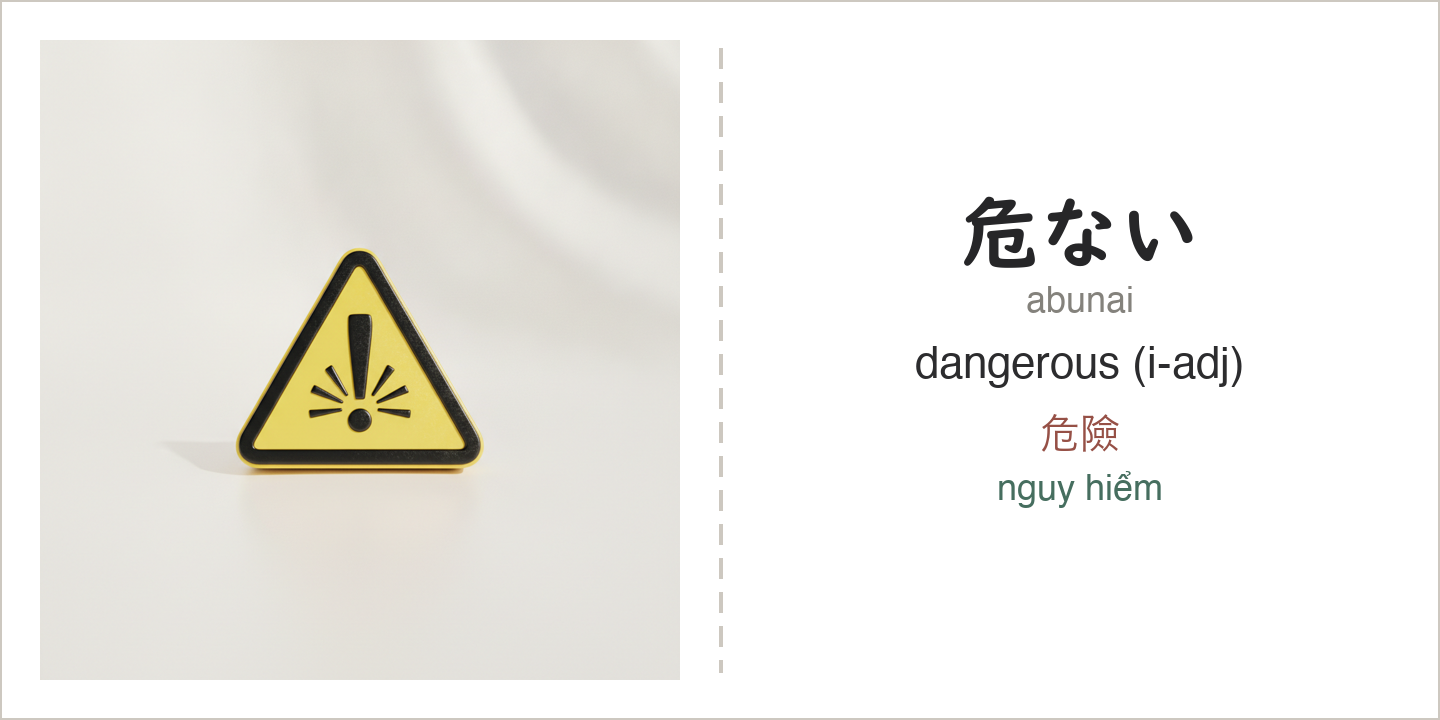
| 危ない あの 男の人は 危ないです。 | dangerous (い-adj) That man is dangerous. | 危险 那个男人很危险。 | 危險 那個男人很危險。 | nguy hiểm Người đàn ông kia nguy hiểm. |
| 安全 この 道は 安全です。 | safe (な-adj) This road is safe. | 安全 这条路很安全。 | 安全 這條路很安全。 | an toàn Con đường này an toàn. |
| 速い 電車の ほうが 速いです。 | fast (い-adj) The train is the faster one. | 快 电车更快。 | 快 電車更快。 | nhanh Tàu điện nhanh hơn. |
| 遅い バスは 電車より 遅いです。 | slow / late (い-adj) The bus is slower than the train. | 慢 公交车比电车慢。 | 慢 公車比電車慢。 | chậm Xe buýt chậm hơn tàu điện. |
| 今日 今日は 休みです。 | today Today is a day off. | 今天 今天休息。 | 今天 今天休息。 | hôm nay Hôm nay là ngày nghỉ. |
| 昨日 昨日 デパートへ 行きました。 | yesterday I went to the department store yesterday. | 昨天 昨天我去了百货商店。 | 昨天 昨天我去了百貨公司。 | hôm qua Hôm qua tôi đã đi trung tâm thương mại. |
| 日本 日本で 一番 有名な 町は どこですか。 | Japan What is the most famous town in Japan? | 日本 日本最有名的城市是哪里? | 日本 日本最有名的城市是哪裡? | Nhật Bản Thị trấn nổi tiếng nhất Nhật Bản là ở đâu? |
Grammar Patterns
distinguish より vs ほうが.
N1 は N2 より adj です
Compare two things. N1 is more X than N2.
N1 と N2 と、 どちらが adj ですか?
Ask which of two is more X. Answer with 「N の ほうが adj です」.
N の ほうが adj です
Highlight one as more X. Used in answer or when contrasting.
範囲 で N が 一番 adj です
Superlative — N is the most X in (range). 「日本で 一番 高い 山」 = the tallest mountain in Japan.
Grammar Picture
- 目標文型this lesson’s pattern这一课的句型這一課的句型mẫu câu của bài này
- 名詞noun名词danh từ
- 助詞particle助词trợ từ
- 述語sentence ending句尾句尾phần cuối câu
- 疑問詞question word疑问词từ để hỏi
Need more detail? Open the sections below.
より vs ほうが — when to use which
Both express comparison, but they emphasize different things:
- より = the reference point ("than X")
「今日は 昨日より 寒いです。」 = today is colder than yesterday - ほうが = the side that is more ("X is more")
「今日の ほうが 寒いです。」 = today is colder (the side of today is more cold)
Use them together to emphasize both: 「今日の ほうが 昨日より 寒いです。」
Superlative range — で marks the group
For superlative (most), the range uses 「で」:
- 日本で 一番 高い 山 = the tallest mountain in Japan
- クラスで 一番 上手 = best in the class
- 一日の中で 朝が 一番 静か = morning is the quietest in the day
「で」 here marks the scope of comparison, not action.
Asking which — どちら / どれ / だれ / いつ
Different question words for different categories of comparison:
- どちら (どっち): which of TWO things
- どれ: which of THREE OR MORE things
- だれ: who (which person)
- いつ: when (which time)
- どこ: where (which place)
- 何: what (which thing)
All can be combined with 「が 一番 adj ですか?」 to ask about the most X.
Stating preference — most polite forms
When asked 「どちらが 好きですか?」 (which do you prefer?), polite answer:
- Casual: 「Aの ほうが 好きです。」
- Modest: 「Aの ほうが 好きですが、 Bも 好きです。」 (A is preferred, but B too) — softer
- Both: 「どちらも 好きです。」 (I like both)
- Neither: 「どちらも 好きじゃありません。」
「どちらも」 = both / neither (with negative). 「どちらか」 = either one.
Roleplay Practice
compare two routes, two foods, two cities.
Try this dialog with a partner (or aloud, switching roles).
Scene: Mike and his contact discuss routes. Each must choose.
Contact: 地下と 高速と、 どちらが 速いですか?
(Underground or expressway — which is faster?)
Mike: 地下の ほうが 速いです。 でも、 高速の ほうが 安全です。
(Underground is faster. But expressway is safer.)
Contact: どちらが いいですか?
(Which is better?)
Mike: 安全が 一番 大切です。 高速で 行きます。
(Safety is most important. I will go by expressway.)
Switch roles. Compare two streets, two coffees, two phones — anything.
How do you say this in Japanese?
Q1. Which is correct: 'today is colder than yesterday'?
- A. 今日は 昨日より 寒いです。
- B. 今日は 昨日と 寒いです。
- C. 今日は 昨日で 寒いです。
Show answer
✓ A. Use 「より」 for the reference.
Q2. Which is correct: 'which is more important?'?
- A. 写真と 鍵と、 どちらが 大切ですか?
- B. 写真や 鍵、 どちらが 大切ですか?
- C. 写真は 鍵、 どちらが 大切ですか?
Show answer
✓ A. 「N1 と N2 と、 どちらが ...?」 is the standard pattern.
Q3. 「日本で 一番 高い 山」 means:
- A. an expensive mountain in Japan
- B. the tallest mountain in Japan
- C. number one Japanese mountain
Show answer
✓ B. the tallest mountain in Japan
「一番」 + adj = most. 「で」 marks the range.
Q4. In the Mini Story, what does Mike say is more important?
- A. 写真
- B. 鍵
- C. 地下
Show answer
✓ B. 鍵
Q5. Write: What do YOU think is the most important thing in life?
No right answer.
Show answer
Samples:
- 人生の 中で 家族が 一番 大切です。 (In life, family is the most important.)
- 健康が 一番 大切です。 (Health is most important.)
How to Use This Lesson
Read the sections in the order they appear. About 40 minutes.
Tomorrow, come back — make 3 comparisons about your morning.
For Teachers
For Teachers (45-60 minutes in class)
- Warm-up (5 min): Show two cities. Students compare with より / ほうが.
- Picture pair (10 min): 10 pairs (big/small, hot/cold). Students make comparisons.
- Which drill (10 min): 「Aと Bと、 どちらが 〜?」 Pairs interview each other.
- Superlative drill (10 min): 「クラスで 一番 ___な 人?」 Students nominate classmates with reasons.
- Roleplay (15 min): Shop, restaurant, or travel. Compare options.
- Check Yourself (5-10 min): Individual quiz, group review.
Common pitfall: Students treat 「ほうが」 as an English word for "more". Reinforce that it means "the side / direction" — Aの ほうが = the A side (is more X).
Cultural note: Japanese tends to avoid direct comparison of people. 「Aさんと Bさんと、 どちらが 上手?」 may sound rude. Soften with 「どちらも 上手です」 or compare hobbies/skills instead.
← Lesson 11 | Midnight Encounter | Lesson 13 →
“Minna no Nihongo” (みんなの日本語) is a textbook series by 3A Corporation. Cinema にほんご is an independent site, not affiliated with or endorsed by 3A Corporation — lesson numbers indicate correspondence only, and no textbook text is reproduced here.