
Lesson 21 of 50 · 〜と思います・〜でしょう・〜かどうか · みんなの日本語 第21課 · N5
Story voice: 〜 N3–N2 Japanese — above this lesson’s level, on purpose. Your target is the Key Sentences.
Episode 21: What Mike Thinks
Mini Story
A spy reports. A spy guesses. A spy holds two competing answers in his head and never commits to either out loud. The verbs of opinion are his tools — 思う, 言う, でしょう, か どうか.
スパイ は報告する。 スパイ は推測する。 スパイ は 二つの相反する答えを頭に保ち、 どちらにも口で commit しない。 意見の動詞 ── 思う、 言う、 でしょう、 か どうか ── が、 彼の道具。
The man at the corner has been there fifteen minutes now. Hands in his pockets. Eyes running over the street. Mike has seen men like him, many times.街角那个男人,已经在那里十五分钟了。手插在口袋里。眼睛在四周扫。这样的男人,麦克见过太多次。街角那個男人,已經在那裡十五分鐘了。手插在口袋裡。眼睛在四周掃。這樣的男人,麥克見過太多次。Người đàn ông ở góc phố đã đứng đó mười lăm phút. Tay đút túi. Mắt đảo quanh. Những người như thế, Mike đã thấy quá nhiều lần.
角の男は、 もう 15 分そこにいる。 手はポケット。 目は周囲を走る。 マイクは似た男を、 何度も見てきた。
マイクは 男の人が 危ないと 思います。
A friend who knows what Mike really is — and pretends not to know. On the platform, the friend left him a few words.有个朋友,知道麦克的真实身份,却装作不知道。在月台上,朋友留下了一句话。有個朋友,知道麥克的真實身分,卻裝作不知道。在月台上,朋友留下了一句話。Một người bạn biết Mike thật ra là ai — nhưng giả vờ không biết. Trên sân ga, người bạn để lại một câu.
マイクが何者かを知っているが、 知らないふりをする友人。 プラットホーム で、 助言を残した。
友達は 「気を つけて」と 言いました。
The forecast scrolls across his phone. Clouds gathering. By evening, a storm.手机上的天气预报滚动着。云在聚集。傍晚有暴风雨。手機上的天氣預報滾動著。雲在聚集。傍晚有暴風雨。Dự báo thời tiết trượt qua màn hình điện thoại. Mây đang tụ lại. Đến chiều tối, một cơn bão.
電話の予報がスクロールする。 雲が集まる。 夕方には嵐。
明日は 雨が 降るでしょう。
And the larger question — the one he cannot answer yet.还有一个更大的问题——他还答不出来的问题。還有一個更大的問題——他還答不出來的問題。Và một câu hỏi lớn hơn — câu hỏi anh còn chưa trả lời được.
そしてより大きな問い ── まだ答えられない問い。
マイクは 京都に 行くか どうか 分かりません。
Chapter 3: The First Exchange →
Key Sentences
1. plain + と 思います (I think that)
マイクは 男の人が 危ないと 思います。
- Mike thinks the man is dangerous.
- 麦克觉得那个男人很危险。 / 麥克覺得那個男人很危險。
- Mike nghĩ người đàn ông đó nguy hiểm.
2. 「…」と 言いました (said)
友達は 「気を つけて」と 言いました。
- (My) friend said “Be careful”.
- 朋友说”小心”。 / 朋友說”小心”。
- Bạn của tôi nói “cẩn thận”.
3. plain + でしょう (probably / will likely)
明日は 雨が 降るでしょう。
- It will probably rain tomorrow.
- 明天大概会下雨。 / 明天大概會下雨。
- Ngày mai chắc sẽ mưa.
4. plain + か どうか 分かりません (whether or not)
マイクは 京都に 行くか どうか 分かりません。
- Mike does not know whether (he) will go to Kyoto.
- 麦克不知道是否去京都。 / 麥克不知道是否去京都。
- Mike không biết có đi Kyoto hay không.
Practice out loud
Say the answer before you look. The same sentences you just read — now from your own mouth.
マイクは どう 思いますか。
マイクは 男の人が 危ないと 思います。
友達は 何と 言いましたか。
友達は 「気を つけて」と 言いました。
明日の 天気は どうでしょうか。
明日は 雨が 降るでしょう。
マイクは 京都に 行きますか。
行くか どうか 分かりません。
日本の 物価は 高いと 思いますか。
your own answer
この アニメは おもしろいと 思いますか。
your own answer
Green — HQ asks you. Blue — Mike answers. Dashed — your turn.
Vocabulary
| 日本語 | English | 简体 | 繁體 | Tiếng Việt |
|---|---|---|---|---|
| 〜と 思います 男の人が 危ないと 思います。 | I think that I think that man is dangerous. | 觉得 我觉得那个男人很危险。 | 覺得 我覺得那個男人很危險。 | nghĩ rằng Tôi nghĩ người đàn ông đó nguy hiểm. |
| 〜と 言いました 友達は 「気を つけて」と 言いました。 | said My friend said, “Take care.” | 说了 朋友说:“小心点。” | 說了 朋友說:「小心點。」 | đã nói Bạn tôi nói: “Cẩn thận nhé.” |
| 〜でしょう 明日は 雨が 降るでしょう。 | probably It will rain tomorrow, I expect. | 大概 明天大概会下雨。 | 大概 明天大概會下雨。 | chắc Ngày mai chắc là sẽ mưa. |
| 〜か どうか 京都に 行くか どうか 分かりません。 | whether or not I don't know whether he will go to Kyoto. | 是否 去不去京都还不知道。 | 是否 去不去京都還不知道。 | có hay không Có đi Kyoto hay không thì chưa biết. |
| 危ない 夜の 道は 危ないと 思います。 | dangerous I think the streets are dangerous at night. | 危险 我觉得晚上的路很危险。 | 危險 我覺得晚上的路很危險。 | nguy hiểm Tôi nghĩ đường ban đêm nguy hiểm. |
| 気を つけます 車に 気を つけてください。 | be careful Please watch out for cars. | 小心 请小心车辆。 | 小心 請小心車輛。 | cẩn thận Xin cẩn thận với xe cộ. |
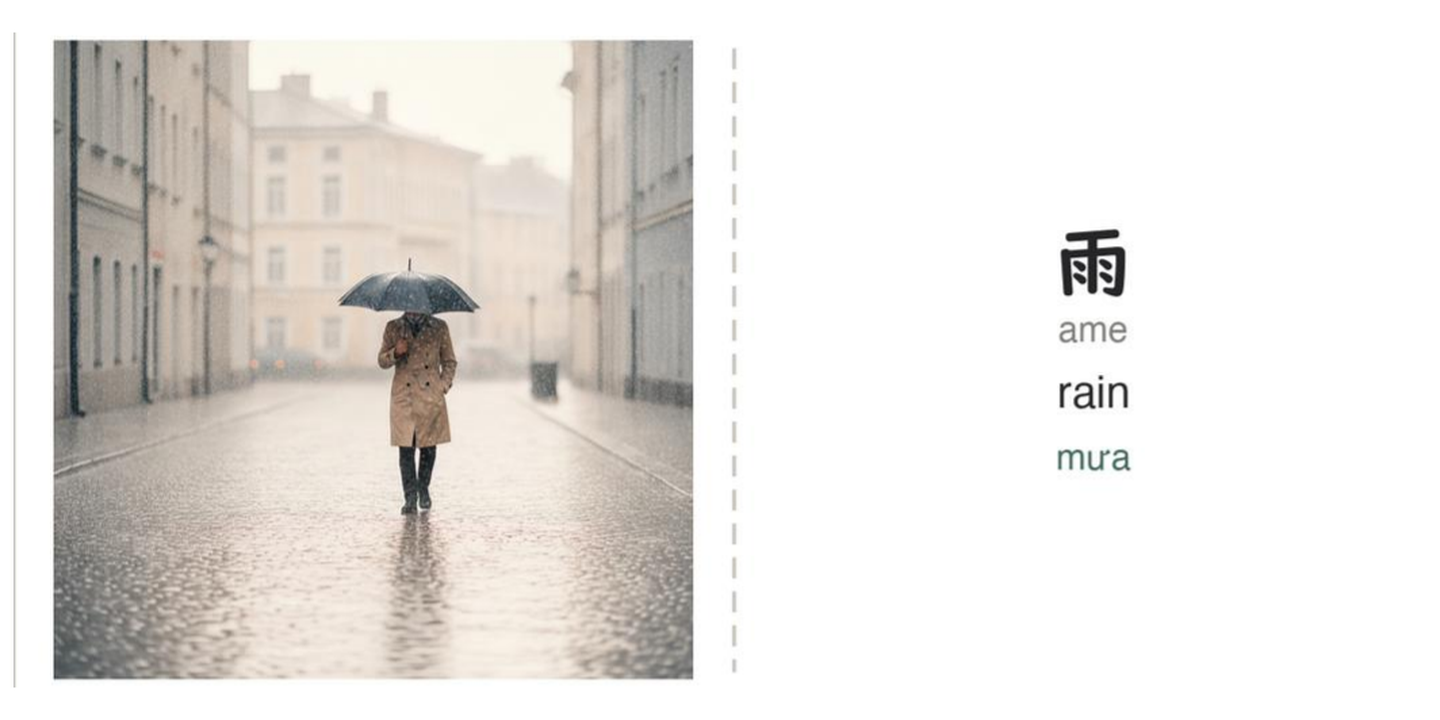
| 雨 雨が 降って います。 | rain It is raining. | 雨 正在下雨。 | 雨 正在下雨。 | mưa Trời đang mưa. |
| 降る 明日も 雨が 降るでしょう。 | fall (rain/snow) It will rain again tomorrow, I expect. | 下 明天大概也会下雨。 | 下 明天大概也會下雨。 | rơi Ngày mai chắc trời cũng mưa. |
| 天気 明日の 天気は どうでしょうか。 | weather What will the weather be like tomorrow? | 天气 明天天气怎么样? | 天氣 明天天氣怎麼樣? | thời tiết Thời tiết ngày mai thế nào? |
| 意見 何か 意見が ありますか。 | opinion Does anyone have an opinion? | 意见 有什么意见吗? | 意見 有什麼意見嗎? | ý kiến Có ý kiến gì không? |
| 問題 これは 大きい 問題だと 思います。 | problem, question I think this is a big problem. | 问题 我觉得这是个大问题。 | 問題 我覺得這是個大問題。 | vấn đề Tôi nghĩ đây là vấn đề lớn. |
| たぶん たぶん 雨が 降るでしょう。 | probably It will probably rain. | 大概 多半会下雨吧。 | 大概 多半會下雨吧。 | có lẽ Có lẽ trời sẽ mưa. |
| きっと きっと 来ると 思います。 | surely I'm sure he will come. | 一定 他一定会来的。 | 一定 他一定會來的。 | nhất định Tôi chắc anh ấy sẽ đến. |
Grammar Patterns
note the plain-form requirement before と.
plain + と 思います
Quote your thought. The clause inside the quote must be plain form.
「 ... 」と 言いました
Quote what someone said. Use 「 」 for direct quotes.
plain + でしょう
Express probability or expectation. Polite probability marker.
plain + か どうか + 動詞
Embed a yes/no question. 'Whether or not X' — used with 分かる, 知る, 聞く.
Grammar Picture
- 目標文型this lesson’s pattern这一课的句型這一課的句型mẫu câu của bài này
- 助詞particle助词trợ từ
- 述語sentence ending句尾句尾phần cuối câu
Plain form is required before と
Regardless of speech politeness, the clause before 「と思います」 / 「と言いました」 / 「と聞きました」 must be in plain form.
- OK: 雨が 降ると 思います。
- NOT OK: 雨が 降りますと 思います。 (Wrong — drop ます.)
The polite ending stays at the end of the whole sentence (思います, 思いません).
でしょう — probability or confirmation
「でしょう」 has two meanings:
- Probability (falling intonation): 雨が 降るでしょう。 = It will probably rain.
- Confirmation (rising intonation): 雨が 降るでしょう?= It will rain, right?
Plain casual form: 「だろう」.
か どうか — embedded yes/no questions
For 'whether or not':
- 京都に 行くか どうか 分かりません。 = (I) do not know whether (I) will go to Kyoto.
- 明日 雨が 降るか どうか 知って いますか? = Do you know whether it will rain tomorrow?
For 'which one' (open-ended), use 「N か」 instead: 「どこに 行くか 知って いません。」 = (I) do not know where to go.
Roleplay Practice
share 3 opinions and 3 weather guesses.
Scene: Two colleagues discuss tomorrow.
Colleague: 明日は どう 思いますか?
(What do you think about tomorrow?)
Mike: 明日は 雨が 降るでしょう。
(It will probably rain.)
Colleague: 仕事は 休みますか?
(Will you take a day off from work?)
Mike: 休むか どうか 分かりません。 でも、 たぶん 行くと 思います。
(I do not know whether I will take a day off. But I think I will probably go.)
How do you say this in Japanese?
Q1. Which is correct: 'I think it will rain'?
- A. 雨が 降ると 思います。
- B. 雨が 降るますと 思います。
- C. 雨が 降ると 思いますと。
Show answer
✓ A. Plain form before と.
Q2. 「明日は 雨が 降るでしょう」 means:
- A. It is raining now.
- B. It will probably rain tomorrow.
- C. It rained yesterday.
Show answer
✓ B. でしょう = probability.
Q3. Which means 'I do not know whether or not Mike will come'?
- A. マイクは 来ると 思いません。
- B. マイクが 来るか どうか 分かりません。
- C. マイクは 来ない でしょう。
Show answer
✓ B. plain + か どうか + 分かりません.
Q4. 「友達は 「気を つけて」と 言いました」 means:
- A. My friend was careful.
- B. My friend said "be careful".
- C. I told my friend to be careful.
Show answer
✓ B. 「と 言いました」 = said (quote).
Q5. Write: What do YOU think about Japanese? Try と 思います.
No right answer.
Show answer
Samples:
- 日本語は 面白いと 思います。 (日本語 is interesting.)
- 日本語は 難しいと 思います。 (日本語 is difficult.)
How to Use This Lesson
Read the sections in the order they appear. About 40 minutes.
Tomorrow, come back and say the Key Sentences again — that is where it sticks.
For Teachers
For Teachers (45-60 minutes in class)
- Warm-up (5 min): Weather prediction. 「明日は どうですか?」 — students answer with でしょう.
- Plain form review (10 min): Drill plain forms before practicing と思う.
- Opinion drill (10 min): 「___は どう 思いますか?」 about food, places, school.
- Indirect speech (10 min): Students quote what classmates said. 「A さんは 〜と 言いました」.
- Roleplay (15 min): News commentary. Students give opinions and predictions.
- Check Yourself (5-10 min).
← Lesson 20 | Midnight Encounter | Lesson 22 →
“Minna no Nihongo” (みんなの日本語) is a textbook series by 3A Corporation. Cinema にほんご is an independent site, not affiliated with or endorsed by 3A Corporation — lesson numbers indicate correspondence only, and no textbook text is reproduced here.