N5 Lesson 10 · Midnight Noir にほんご / Series 1 · みんなの日本語 第 10 課
Coming Soon — Video will be published shortly.
Episode 10: Where It Hides
The information leads Mike to a small office on the third floor of an empty building. The lights are off. The door is unlocked. He enters silently.
情報がマイクを誘う ── 空きビルの 3 階、 小さな オフィス。 灯りは消えている。 扉は施錠されていない。 静かに、 マイクは入る。
The room is bare except for a table at its center. On the table — what he came for.
部屋には、 中央の テーブル のみ。 その上には ── 目的のもの。
テーブルの 上に カメラが あります。
He reaches for the camera. Then he turns. A presence — heat, breath, a body. Someone else is in the room.
カメラに、 手を伸ばす。 振り返る。 気配 ── 熱、 息、 体。 部屋に、 もう一人。
部屋の 中に 男の人が います。
Time to leave. But first — the key. He pats his coat. Still there. Cold against his ribs.
離れる時。 だが、 その前に ── 鍵。 コートを叩く。 まだそこにある。 肋骨に、 冷たく。
鍵は ポケットの 中に あります。
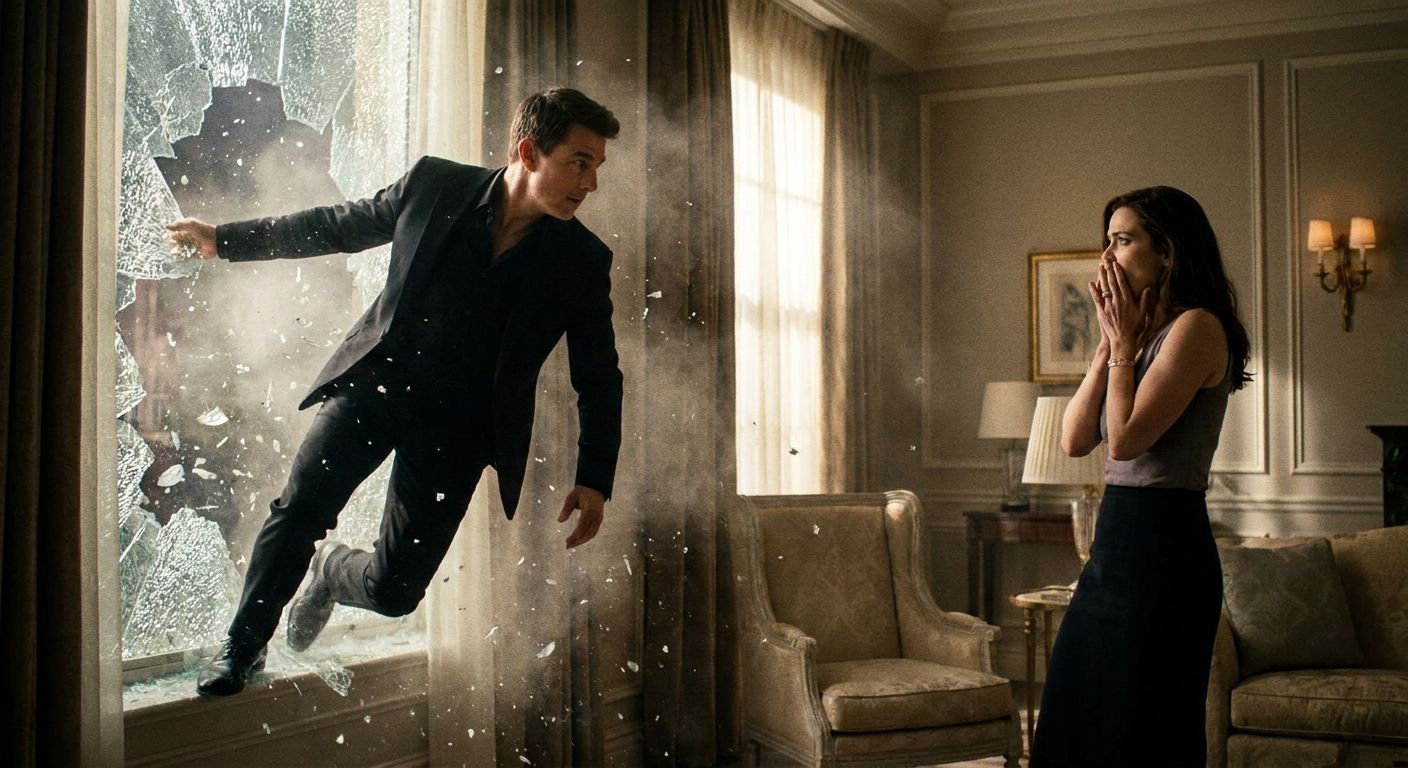
He moves toward the door. He hears it before he sees it. A footstep. Soft. Close.
扉へ。 見るより、 先に聞こえる。 足音。 静かに。 近い。
マイクの 後ろに スパイが います。
→ Read the related chapter (Chapter 5: The Locked Room)
Available in 日本語 / English / 中文 / 繁體中文 / Tiếng Việt
Key Sentences
1. 場所 に N が あります (a camera on the table)
テーブルの 上に カメラが あります。
- There is a camera on the table.
- 桌子上有相机。 / 桌子上有相機。
- Có một máy ảnh trên bàn.
2. 場所 に N が います (a man inside the room)
部屋の 中に 男の人が います。
- There is a man inside the room.
- 房间里有一个男人。 / 房間裡有一個男人。
- Có một người đàn ông trong phòng.
3. N は 場所 に あります (the key is in the pocket)
鍵は ポケットの 中に あります。
- The key is in the pocket.
- 钥匙在口袋里。 / 鑰匙在口袋裡。
- Chìa khóa ở trong túi.
4. N の 位置 に N が います (a spy behind Mike)
マイクの 後ろに スパイが います。
- Behind Mike, there is a spy.
- 麦克的后面有一个间谍。 / 麥克的後面有一個間諜。
- Phía sau Mike có một điệp viên.
Vocabulary
| 日本語 | English | 简体 | 繁體 | Tiếng Việt |
|---|---|---|---|---|
| あります | exist (things, plants) | 有 / 在 | 有 / 在 | có (vật) |
| います | exist (people, animals) | 有 / 在 | 有 / 在 | có (người, động vật) |
| 上 | on, top | 上面 | 上面 | trên |
| 下 | under | 下面 | 下面 | dưới |
| 前 | in front | 前面 | 前面 | trước |
| 後ろ | behind | 后面 | 後面 | sau |
| 中 | inside | 里面 | 裡面 | trong |
| 外 | outside | 外面 | 外面 | ngoài |
| 隣 | next to (adjacent) | 旁边 | 旁邊 | cạnh |
| 近く | near, nearby | 附近 | 附近 | gần |
| テーブル | table | 桌子 | 桌子 | bàn |
| ポケット | 口袋 | 口袋 | túi | |
| 部屋 | room | 房间 | 房間 | căn phòng |
| どこ | where | 哪里 | 哪裡 | ở đâu |
Grammar Patterns
場所 に N が あります
Exists at a place — for things and plants. Inanimate.
場所 に N が います
Exists at a place — for people and animals. Animate.
N は 場所 に あります/います
Topic version — answers “where is N?”. The thing/person is the topic; the location is the answer.
N1 の 位置 (e.g. テーブルの 上)
Relational location. 「N1 の 上/下/前/後ろ/中/隣」 = on / under / in front / behind / inside / next to N1.
Grammar Picture
Need more detail? Open the sections below.
あります vs います — which one?
The split is simple: inanimate vs animate.
- あります: things, plants, abstract — テーブル, 本, お金, 時間, カメラ, 木
- います: people, animals, anything that moves on its own — マイク, スパイ, 犬, ねこ, 友達
Edge cases: cars and trains use あります (treated as objects). Insects and fish use います (treated as animate).
に vs で — location particles
Both relate to locations, but they mean different things:
- に + あります/います = exists at (location of existence)
テーブルの 上に カメラが あります。 - で + action verb = where action happens (location of action, Lesson 06)
カフェで コーヒーを 飲みます。
Quick test: if the verb describes existence, use 「に」. If it describes an action, use 「で」.
Asking ‘where is X?’ — どこですか?
Two ways to ask:
- N は どこに ありますか? = Where is N located? (formal, complete)
- N は どこですか? = Where is N? (shorter, conversational)
Both work. The short form is more common in daily speech.
Answer with: 「N は 場所に あります/います。」 Or even shorter: 「ポケットの 中です。」
隣 vs 近く vs そば — all near, but how near?
Three words for proximity:
- 隣 (となり): directly adjacent, side by side, same category
e.g., next-door house, person sitting next to you - そば: very close, almost touching
e.g., right by your side - 近く (ちかく): nearby in general, broader area
e.g., in the same neighborhood
「隣」 implies same-category proximity. A house can be 隣 of another house, but a tree is not 隣 of a house — it’s 近く or そば.
Roleplay Practice
Try this dialog with a partner (or aloud, switching roles).
Scene: Mike asks a shopkeeper for a small item. The shopkeeper helps him find it.
Mike: すみません、 鍵は どこに ありますか?
(Excuse me, where are the keys?)
Clerk: 鍵は テーブルの 上に あります。
(The keys are on the table.)
Mike: ありがとうございます。 カメラは どこですか?
(Thank you. Where is the camera?)
Clerk: カメラは あの 部屋の 中に あります。
(The camera is inside that room.)
Mike: 部屋の 中に だれか いますか?
(Is anyone inside the room?)
Clerk: いいえ、 だれも いません。 どうぞ。
(No, no one is there. Please go in.)
Tip: Practice asking 「どこに ありますか?」 / 「どこに いますか?」 for things and people in your room.
How do you say this in Japanese?
How to Use This Lesson
For Self-Study (45 minutes)
- Read Grammar Patterns (5 min) — focus on あります vs います split.
- Practice Key Sentences (10 min) — describe your room aloud.
- Learn Vocabulary (10 min) — pair location words as opposites (上/下, 前/後ろ, 中/外).
- Read Mini Story (5 min) — feel the tension of an empty room.
- Roleplay (10 min) — try asking 「どこに ありますか?」 for five different items.
- Review tomorrow — close your eyes and describe where things are in your room.
Check Yourself (click to expand)
Q1. Which is correct: ‘There is a camera on the table’?
- A. テーブルの 上に カメラが います。
- B. テーブルの 上に カメラが あります。
- C. テーブルの 上で カメラが あります。
Show answer
✓ B. テーブルの 上に カメラが あります。
Camera is a thing, so 「あります」. Location of existence uses 「に」.
Q2. Which is correct: ‘There is a man inside the room’?
- A. 部屋の 中に 男の人が あります。
- B. 部屋の 中に 男の人が います。
- C. 部屋の 中で 男の人が います。
Show answer
✓ B. 部屋の 中に 男の人が います。
A person is animate, so 「います」.
Q3. 「テーブル の 下」 means:
- A. on the table
- B. under the table
- C. next to the table
Show answer
✓ B. under the table
「下」 = under.
Q4. In the Mini Story, what is on the table?
- A. A key (鍵)
- B. A camera
- C. A photograph
Show answer
✓ B. A camera
Q5. Write: Describe where YOUR keys are right now.
No right answer.
Show answer
Samples:
- 鍵は ポケットの 中に あります。
- 鍵は テーブルの 上に あります。
- 鍵は かばんの 中に あります。
For Teachers (click to expand)
For Teachers (45-60 minutes in class)
- Warm-up (5 min): Place objects around the room. Students identify each by location.
- Animate / inanimate sort (10 min): Picture cards of things, plants, people, animals. Sort into あります / います piles.
- Location drill (10 min): Pictures with prepositions (on, under, behind). Students make sentences with 「___の 上/下/後ろに…」.
- Spatial map (10 min): Draw a room layout. Students describe positions.
- Roleplay (15 min): Shop or office scene. Customer asks where things are, clerk answers.
- Check Yourself (5-10 min): Individual quiz, group review.
Common pitfall: Students apply 「に」 to action verbs (e.g., 「カフェに コーヒーを 飲みます」). Reinforce that 「に」 is for existence verbs, 「で」 for action verbs.
Cultural note: Position words in Japanese require の: 「テーブルの 上」 (literally “table\’s top”). Unlike English prepositions, these are nouns that follow a possessive.
Speak aloud! Now your turn!