Lesson 10 of 50 · 〜に〜が あります・います · みんなの日本語 第10課 · N5
Story voice: 〜 N3–N2 Japanese — above this lesson’s level, on purpose. Your target is the Key Sentences.
Episode 10: Where It Hides
Mini Story
feel the tension of an empty room.
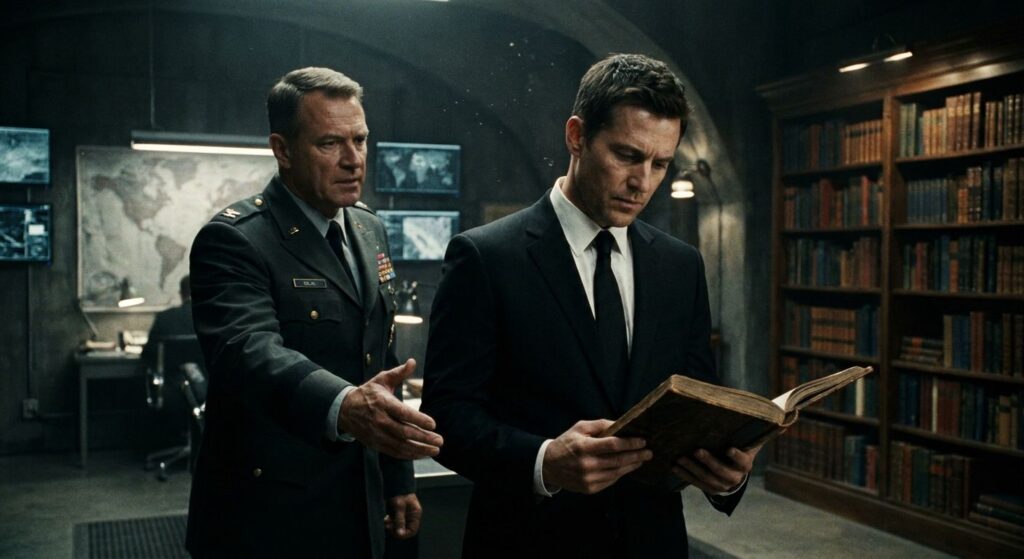
The information beckons Mike — third floor of an empty building, a small office. The lights are off. The door is not locked. Quietly, Mike goes in.情报把麦克引到这里——空楼的三层,一间小办公室。灯是灭的。门没有上锁。麦克悄悄地进去。情報把麥克引到這裡——空樓的三樓,一間小辦公室。燈是滅的。門沒有上鎖。麥克悄悄地進去。Thông tin dẫn dụ Mike đến đây — tầng ba của một toà nhà bỏ trống, một văn phòng nhỏ. Đèn đã tắt. Cửa không khóa. Lặng lẽ, Mike bước vào.
情報がマイクを誘う ── 空きビルの 3 階、 小さな オフィス。 灯りは消えている。 扉は施錠されていない。 静かに、 マイクは入る。
In the room, only a table at the center. And on it — the thing he came for.房间里,只有正中央一张桌子。桌子上——正是他要的东西。房間裡,只有正中央一張桌子。桌子上——正是他要的東西。Trong phòng, chỉ có một chiếc bàn ở chính giữa. Và trên bàn — chính là thứ anh đến để tìm.
部屋には、 中央の テーブル のみ。 その上には ── 目的のもの。
テーブルの 上に カメラが あります。
He reaches for the camera. He turns. A presence — heat, breath, a body. In the room, one more person.他朝相机伸出手。回头。有气息——体温、呼吸、一个身体。房间里,还有一个人。他朝相機伸出手。回頭。有氣息——體溫、呼吸、一個身體。房間裡,還有一個人。Anh với tay về phía chiếc máy ảnh. Rồi quay lại. Một sự hiện diện — hơi nóng, hơi thở, một thân người. Trong phòng, còn một người nữa.
カメラに、 手を伸ばす。 振り返る。 気配 ── 熱、 息、 体。 部屋に、 もう一人。
部屋の 中に 男の人が います。
Time to go. But first — the key. He pats his coat. Still there. Cold, against his ribs.该走了。但在那之前——钥匙。他拍了拍外套。还在。贴着肋骨,凉凉的。該走了。但在那之前——鑰匙。他拍了拍外套。還在。貼著肋骨,涼涼的。Đến lúc phải đi. Nhưng trước đó — chiếc chìa khóa. Anh vỗ nhẹ áo khóac. Vẫn còn đó. Lạnh, áp vào xương sườn.
離れる時。 だが、 その前に ── 鍵。 コートを叩く。 まだそこにある。 肋骨に、 冷たく。
鍵は ポケットの 中に あります。
To the door. He hears it before he sees it. A footstep. Soft. Close.走向门口。还没看见,先听见了。脚步声。很轻。很近。走向門口。還沒看見,先聽見了。腳步聲。很輕。很近。Về phía cửa. Chưa thấy, đã nghe. Một tiếng bước chân. Khẽ. Gần.
扉へ。 見るより、 先に聞こえる。 足音。 静かに。 近い。
マイクの 後ろに スパイが います。
Key Sentences
describe your room aloud.
1. 場所 に N が あります (a camera on the table)
テーブルの 上に カメラが あります。
- There is a camera on the table.
- 桌子上有相机。 / 桌子上有相機。
- Có một máy ảnh trên bàn.
2. 場所 に N が います (a man inside the room)
部屋の 中に 男の人が います。
- There is a man inside the room.
- 房间里有一个男人。 / 房間裡有一個男人。
- Có một người đàn ông trong phòng.
3. N は 場所 に あります (the key is in the pocket)
鍵は ポケットの 中に あります。
- The key is in the pocket.
- 钥匙在口袋里。 / 鑰匙在口袋裡。
- Chìa khóa ở trong túi.
4. N の 位置 に N が います (a spy behind Mike)
マイクの 後ろに スパイが います。
- Behind Mike, there is a spy.
- 麦克的后面有一个间谍。 / 麥克的後面有一個間諜。
- Phía sau Mike có một điệp viên.
Practice out loud
Say the answer before you look. The same sentences you just read — now from your own mouth.
テーブルの 上に 何が ありますか。
テーブルの 上に カメラが あります。
部屋の 中に だれが いますか。
部屋の 中に 男の人が います。
鍵は かばんの 中に ありますか。
いいえ、かばんの 中には ありません。ポケットの 中に あります。
マイクの 後ろに だれが いますか。
マイクの 後ろに スパイが います。
あなたの 部屋に 何が ありますか。
your own answer
いま となりに だれが いますか。
your own answer
Green — HQ asks you. Blue — Mike answers. Dashed — your turn.
Vocabulary
pair location words as opposites (上/下, 前/後ろ, 中/外).
| 日本語 | English | 简体 | 繁體 | Tiếng Việt |
|---|---|---|---|---|
| あります テーブルの 上に カメラが あります。 | exist (things, plants) There is a camera on the table. | 有 / 在 桌子上有相机。 | 有 / 在 桌子上有相機。 | có (vật) Trên bàn có máy ảnh. |
| います 部屋の 中に 男の人が います。 | exist (people, animals) There is a man in the room. | 有 / 在 房间里有一个男人。 | 有 / 在 房間裡有一個男人。 | có (người, động vật) Trong phòng có một người đàn ông. |
| 上 テーブルの 上に 本が あります。 | on, top There is a book on the table. | 上面 桌子上有书。 | 上面 桌子上有書。 | trên Trên bàn có quyển sách. |
| 下 テーブルの 下に 猫が います。 | under There is a cat under the table. | 下面 桌子下面有猫。 | 下面 桌子下面有貓。 | dưới Dưới bàn có con mèo. |
| 前 駅の 前に コンビニが あります。 | in front There is a convenience store in front of the station. | 前面 车站前面有便利店。 | 前面 車站前面有便利商店。 | trước Trước nhà ga có cửa hàng tiện lợi. |
| 後ろ マイクの 後ろに スパイが います。 | behind There is a spy behind Mike. | 后面 麦克后面有间谍。 | 後面 麥克後面有間諜。 | sau Phía sau Mike có điệp viên. |
| 中 ポケットの 中に 鍵が あります。 | inside There is a key in the pocket. | 里面 口袋里有钥匙。 | 裡面 口袋裡有鑰匙。 | trong Trong túi có chìa khóa. |
| 外 部屋の 外に 犬が います。 | outside There is a dog outside the room. | 外面 房间外面有狗。 | 外面 房間外面有狗。 | ngoài Ngoài phòng có con chó. |
| 隣 会社の 隣に カフェが あります。 | next to (adjacent) There is a cafe next to the company. | 旁边 公司旁边有咖啡店。 | 旁邊 公司旁邊有咖啡店。 | cạnh Bên cạnh công ty có quán cà phê. |
| 近く 駅の 近くに デパートが あります。 | near, nearby There is a department store near the station. | 附近 车站附近有百货商店。 | 附近 車站附近有百貨公司。 | gần Gần nhà ga có trung tâm thương mại. |
| テーブル テーブルの 上に 何が ありますか。 | table What is on the table? | 桌子 桌子上有什么? | 桌子 桌子上有什麼? | bàn Trên bàn có gì? |
| ポケット 鍵は ポケットの 中に あります。 | pocket The key is in the pocket. | 口袋 钥匙在口袋里。 | 口袋 鑰匙在口袋裡。 | túi Chìa khóa ở trong túi. |
| 部屋 部屋に だれが いますか。 | room Who is in the room? | 房间 房间里有谁? | 房間 房間裡有誰? | căn phòng Trong phòng có ai? |
| どこ 鍵は どこに ありますか。 | where Where is the key? | 哪里 钥匙在哪里? | 哪裡 鑰匙在哪裡? | ở đâu Chìa khóa ở đâu? |
Grammar Patterns
focus on あります vs います split.
場所 に N が あります
Exists at a place — for things and plants. Inanimate.
場所 に N が います
Exists at a place — for people and animals. Animate.
N は 場所 に あります/います
Topic version — answers "where is N?". The thing/person is the topic; the location is the answer.
N1 の 位置 (e.g. テーブルの 上)
Relational location. 「N1 の 上/下/前/後ろ/中/隣」 = on / under / in front / behind / inside / next to N1.
Grammar Picture
- 名詞noun名词danh từ
- 助詞particle助词trợ từ
- 述語sentence ending句尾句尾phần cuối câu
Need more detail? Open the sections below.
あります vs います — which one?
The split is simple: inanimate vs animate.
- あります: things, plants, abstract — テーブル, 本, お金, 時間, カメラ, 木
- います: people, animals, anything that moves on its own — マイク, スパイ, 犬, ねこ, 友達
Edge cases: cars and trains use あります (treated as objects). Insects and fish use います (treated as animate).
に vs で — location particles
Both relate to locations, but they mean different things:
- に + あります/います = exists at (location of existence)
テーブルの 上に カメラが あります。 - で + action verb = where action happens (location of action, Lesson 06)
カフェで コーヒーを 飲みます。
Quick test: if the verb describes existence, use 「に」. If it describes an action, use 「で」.
Asking 'where is X?' — どこですか?
Two ways to ask:
- N は どこに ありますか? = Where is N located? (formal, complete)
- N は どこですか? = Where is N? (shorter, conversational)
Both work. The short form is more common in daily speech.
Answer with: 「N は 場所に あります/います。」 Or even shorter: 「ポケットの 中です。」
隣 vs 近く vs そば — all near, but how near?
Three words for proximity:
- 隣 (となり): directly adjacent, side by side, same category
e.g., next-door house, person sitting next to you - そば: very close, almost touching
e.g., right by your side - 近く (ちかく): nearby in general, broader area
e.g., in the same neighborhood
「隣」 implies same-category proximity. A house can be 隣 of another house, but a tree is not 隣 of a house — it's 近く or そば.
Roleplay Practice
try asking 「どこに ありますか?」 for five different items.
Try this dialog with a partner (or aloud, switching roles).
Scene: Mike asks a shopkeeper for a small item. The shopkeeper helps him find it.
Mike: すみません、 鍵は どこに ありますか?
(Excuse me, where are the keys?)
Clerk: 鍵は テーブルの 上に あります。
(The keys are on the table.)
Mike: ありがとうございます。 カメラは どこですか?
(Thank you. Where is the camera?)
Clerk: カメラは あの 部屋の 中に あります。
(The camera is inside that room.)
Mike: 部屋の 中に だれか いますか?
(Is anyone inside the room?)
Clerk: いいえ、 だれも いません。 どうぞ。
(No, no one is there. Please go in.)
Practice asking 「どこに ありますか?」 / 「どこに いますか?」 for things and people in your room.
How do you say this in Japanese?
Q1. Which is correct: 'There is a camera on the table'?
- A. テーブルの 上に カメラが います。
- B. テーブルの 上に カメラが あります。
- C. テーブルの 上で カメラが あります。
Show answer
✓ B. テーブルの 上に カメラが あります。
Camera is a thing, so 「あります」. Location of existence uses 「に」.
Q2. Which is correct: 'There is a man inside the room'?
- A. 部屋の 中に 男の人が あります。
- B. 部屋の 中に 男の人が います。
- C. 部屋の 中で 男の人が います。
Show answer
✓ B. 部屋の 中に 男の人が います。
A person is animate, so 「います」.
Q3. 「テーブル の 下」 means:
- A. on the table
- B. under the table
- C. next to the table
Show answer
✓ B. under the table
「下」 = under.
Q4. In the Mini Story, what is on the table?
- A. A key (鍵)
- B. A camera
- C. A photograph
Show answer
✓ B. A camera
Q5. Write: Describe where YOUR keys are right now.
No right answer.
Show answer
Samples:
- 鍵は ポケットの 中に あります。
- 鍵は テーブルの 上に あります。
- 鍵は かばんの 中に あります。
How to Use This Lesson
Read the sections in the order they appear. About 40 minutes.
Tomorrow, come back — close your eyes and describe where things are in your room.
For Teachers
For Teachers (45-60 minutes in class)
- Warm-up (5 min): Place objects around the room. Students identify each by location.
- Animate / inanimate sort (10 min): Picture cards of things, plants, people, animals. Sort into あります / います piles.
- Location drill (10 min): Pictures with prepositions (on, under, behind). Students make sentences with 「___の 上/下/後ろに...」.
- Spatial map (10 min): Draw a room layout. Students describe positions.
- Roleplay (15 min): Shop or office scene. Customer asks where things are, clerk answers.
- Check Yourself (5-10 min): Individual quiz, group review.
Common pitfall: Students apply 「に」 to action verbs (e.g., 「カフェに コーヒーを 飲みます」). Reinforce that 「に」 is for existence verbs, 「で」 for action verbs.
Cultural note: Position words in Japanese require の: 「テーブルの 上」 (literally "table\'s top"). Unlike English prepositions, these are nouns that follow a possessive.
← Lesson 09 | Midnight Encounter | Lesson 11 →
“Minna no Nihongo” (みんなの日本語) is a textbook series by 3A Corporation. Cinema にほんご is an independent site, not affiliated with or endorsed by 3A Corporation — lesson numbers indicate correspondence only, and no textbook text is reproduced here.