Lesson 15 of 50 · 〜てもいい・〜てはいけません · みんなの日本語 第15課 · N5
Story voice: 〜 N3–N2 Japanese — above this lesson’s level, on purpose. Your target is the Key Sentences.
Episode 15: Rules of the Trade
Mini Story
Every world has its rules. Mike’s world too. The first rule of espionage is simple — know what you may do, and what you must never do.每个世界都有规则。麦克的世界也有。谍报的第一条规则很简单——知道什么可以做,什么绝不能做。每個世界都有規則。麥克的世界也有。諜報的第一條規則很簡單——知道什麼可以做,什麼絕不能做。Thế giới nào cũng có luật. Thế giới của Mike cũng vậy. Luật thứ nhất của nghề tình báo rất đơn giản — biết điều gì được làm, và điều gì tuyệt đối không được làm.
どの世界にも規則がある。 マイクの世界にも。 諜報の第一の規則は単純 ── してよいことと、 してはならないことを、 知ること。
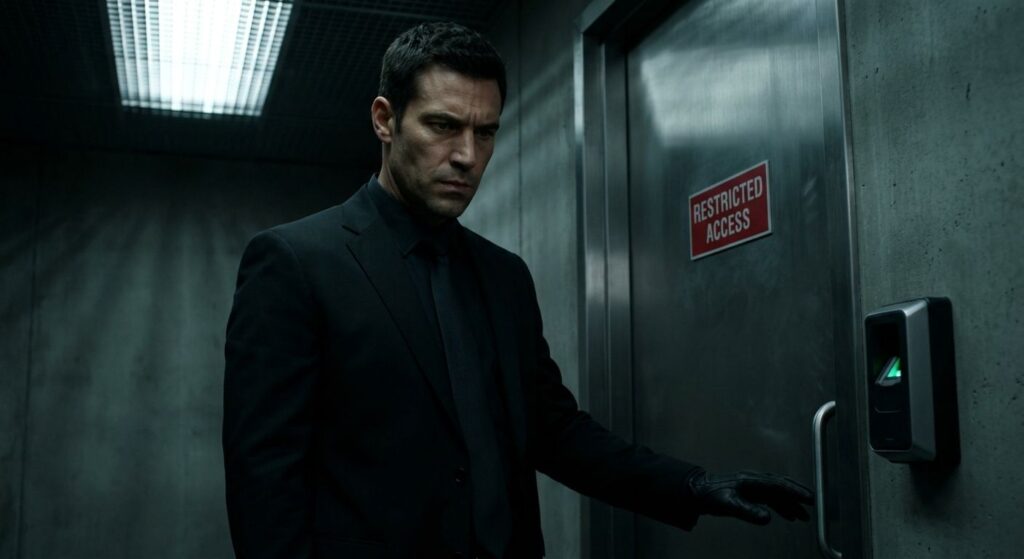
Mike approaches a closed door. Beside it, a guard. Neutral eyes. Mike’s voice comes soft, and polite.麦克走近一扇关着的门。门边站着警卫。眼神不带立场。麦克的声音放得很轻,很客气。麥克走近一扇關著的門。門邊站著警衛。眼神不帶立場。麥克的聲音放得很輕,很客氣。Mike tiến lại gần một cánh cửa đóng kín. Bên cạnh, một người gác. Ánh mắt trung lập. Giọng Mike cất lên thật nhẹ, thật lễ độ.
マイクは閉じた扉に近づく。 横に守衛。 中立の目。 マイクの声は柔らかく、 丁寧に。
ちょっと 入っても いいですか?
The guard nods. The door opens.警卫点头。门开了。警衛點頭。門開了。Người gác gật đầu. Cánh cửa mở ra.
守衛は頷く。 扉が開く。
はい、 入っても いいです。
Inside, signs in red — no photographs. No recording. No talking. Mike reads them once. Then once more.里面,红色的标示——禁止拍照。禁止录音。禁止出声。麦克读了一遍。又读了一遍。裡面,紅色的標示——禁止拍照。禁止錄音。禁止出聲。麥克讀了一遍。又讀了一遍。Bên trong, những tấm biển đỏ — cấm chụp ảnh. Cấm ghi âm. Cấm nói. Mike đọc một lần. Rồi đọc thêm lần nữa.
中、 赤い表示 ── 撮影禁止。 録音禁止。 発声禁止。 マイクは一度読む。 そしてもう一度。
でも、 写真を 撮っては いけません。
At a small desk by the window, he asks the one question that matters today.在窗边的小桌前,他问出今天唯一重要的问题。在窗邊的小桌前,他問出今天唯一重要的問題。Bên chiếc bàn nhỏ cạnh cửa sổ, anh hỏi câu hỏi duy nhất quan trọng của ngày hôm nay.
窓辺の小さな desk で、 今日唯一重要な質問を、 する。
ここで 待っても いいですか?
Key Sentences
1. V-ても いいですか? (asking permission)
ちょっと 入っても いいですか?
- May I come in for a moment?
- 我可以进去一下吗? / 我可以進去一下嗎?
- Tôi vào một chút có được không?
2. V-ても いいです (granting permission)
はい、 入っても いいです。
- Yes, you may come in.
- 是的,可以进来。 / 是的,可以進來。
- Vâng, mời vào.
3. V-ては いけません (prohibition)
でも、 写真を 撮っては いけません。
- But you must not take photos.
- 但是不能拍照。 / 但是不能拍照。
- Nhưng không được chụp ảnh.
4. ここで V-ても いいですか? (asking with place)
ここで 待っても いいですか?
- May I wait here?
- 我可以在这里等吗? / 我可以在這裡等嗎?
- Tôi chờ ở đây có được không?
Practice out loud
Say the answer before you look. The same sentences you just read — now from your own mouth.
ちょっと 入っても いいですか。
はい、入っても いいです。
ここで 写真を 撮っても いいですか。
いいえ、ここで 写真を 撮っては いけません。外で 撮ってください。
ここで 待っても いいですか。
はい、ここで 待っても いいです。
たばこを 吸っても いいですか。
いいえ、たばこを 吸っては いけません。
ここに 座っても いいですか。
your own answer
この 資料を 見ても いいですか。
your own answer
Green — HQ asks you. Blue — Mike answers. Dashed — your turn.
Vocabulary
note the state verbs.
| 日本語 | English | 简体 | 繁體 | Tiếng Việt |
|---|---|---|---|---|
| 〜て も いいです 入っても いいです。 | may / is OK to You may come in. | 可以 可以进来。 | 可以 可以進來。 | được Bạn có thể vào. |
| 〜て は いけません 写真を 撮っては いけません。 | must not Taking photos is not allowed. | 不可以 不可以拍照。 | 不可以 不可以拍照。 | không được Không được phép chụp ảnh. |
| 入ります ちょっと 入っても いいですか。 | enter May I come in for a moment? | 进 我可以进来一下吗? | 進 我可以進來一下嗎? | vào Tôi vào một chút được không? |
| 出ます 部屋を 出ても いいですか。 | exit May I leave the room? | 出 我可以离开房间吗? | 出 我可以離開房間嗎? | ra Tôi ra khỏi phòng được không? |
| 使います この パソコンを 使っても いいですか。 | use May I use this computer? | 用 我可以用这台电脑吗? | 用 我可以用這台電腦嗎? | dùng Tôi dùng máy tính này được không? |
| 知って います あの 人を 知って いますか。 | know (state) Do you know that person? | 知道 你认识那个人吗? | 知道 你認識那個人嗎? | biết Bạn có biết người đó không? |
| 住んで います 京都に 住んで います。 | live (state) I live in Kyoto. | 住 我住在京都。 | 住 我住在京都。 | sống Tôi sống ở Kyoto. |
| 働いて います 銀行で 働いて います。 | work (state) I work at a bank. | 工作 我在银行工作。 | 工作 我在銀行工作。 | làm việc Tôi làm việc ở ngân hàng. |
| 結婚して います わたしは 結婚して います。 | be married (state) I am married. | 结婚 我结婚了。 | 結婚 我結婚了。 | kết hôn Tôi đã kết hôn. |
| 静かに 静かに 入ってください。 | quietly Please come in quietly. | 安静地 请安静地进来。 | 安靜地 請安靜地進來。 | yên lặng Xin vào nhẹ nhàng. |
| だめ ここで たばこは だめです。 | no good, not allowed No smoking here. | 不行 这里不行抽烟。 | 不行 這裡不行抽菸。 | không được Ở đây thì không được hút thuốc. |
| 規則 これは 会社の 規則です。 | rule This is a company rule. | 规则 这是公司的规定。 | 規則 這是公司的規定。 | quy tắc Đây là quy định của công ty. |
Grammar Patterns
V-て も いいですか?
Ask for permission. Same te-form as Lesson 14.
V-て も いいです / だめです
Grant or deny permission. 「いいです」 = OK. 「だめです」 = not OK (casual).
V-て は いけません
Strong prohibition. Must not do.
V-て います (state) — 知って います, 住んで います
Some verbs in te-form います describe a continuing state, not progressive action.
Grammar Picture
- 目標文型this lesson’s pattern这一课的句型這一課的句型mẫu câu của bài này
- 名詞noun名词danh từ
- 助詞particle助词trợ từ
- 述語sentence ending句尾句尾phần cuối câu
Need more detail? Open the sections below.
〜ては いけません vs softer prohibitions
「〜ては いけません」 is strong — almost legal-sounding. Softer prohibitions:
- 〜ないで ください = please do not (Lesson 17)
- 〜ては だめです = should not (informal)
- ちょっと… + trailing off = subtle refusal
In daily conversation, Japanese tends to soften prohibitions. Hard 「いけません」 is for signs, rules, official instructions.
Knowing / living / working — state verbs
These verbs are always in 〜て います when describing a current condition:
- 知って います = know (NOT 知ります for I know)
- 住んで います = live in (NOT 住みます for I live)
- 働いて います = work at (NOT 働きます for I work)
- 結婚して います = be married (NOT 結婚します for I am married)
Note: the negative of 「知って います」 is 「知りません」 (not 「知って いません」). Asymmetric pattern — memorize.
Polite alternatives for 「だめ」
「だめです」 is friendly-blunt. Politer ways to say no:
- ちょっと…
- すみません、 ちょっと…
- 申し訳ありませんが、 〜は いけません。
「だめ」 is fine between friends, but in formal contexts, soften.
Roleplay Practice
ask permission for 5 things in your room.
Scene: A museum. Mike asks the staff about rules.
Mike: すみません、 写真を 撮っても いいですか?
(Excuse me, may I take photos?)
Staff: いいえ、 写真は 撮っては いけません。
(No, you must not take photos.)
Mike: メモを 書いても いいですか?
(May I take notes?)
Staff: はい、 メモは 書いても いいですよ。
(Yes, you may take notes.)
Mike: ありがとう ございます。
(Thank you.)
How do you say this in Japanese?
Q1. Which is correct: 'May I enter?'?
- A. 入っては いいですか?
- B. 入っても いいですか?
- C. 入ってに いいですか?
Show answer
✓ B. 入っても いいですか?
「V-て も いいですか?」 = May I do?
Q2. Which is correct: 'You must not take photos'?
- A. 写真を 撮っても いけません。
- B. 写真を 撮っては いけません。
- C. 写真は 撮っても だめ。
Show answer
✓ B. 写真を 撮っては いけません。
Q3. 「知って います」 means:
- A. I am about to know
- B. I know (state)
- C. I will know
Show answer
✓ B. I know (state)
Some verbs use V-て います to describe an ongoing state, not progressive action.
Q4. In the Mini Story, what is Mike NOT allowed to do?
- A. Enter
- B. Wait
- C. Take photos
Show answer
✓ C. Take photos
Q5. Write: Ask permission to drink water in class.
Try the pattern.
Show answer
Sample: 水を 飲んでも いいですか? (May I drink water?)
How to Use This Lesson
Read the sections in the order they appear. About 40 minutes.
Tomorrow, come back and say the Key Sentences again — that is where it sticks.
For Teachers
For Teachers (45-60 minutes in class)
- Warm-up (5 min): Sign reading — show real Japanese rule signs. Students translate.
- Permission drill (10 min): Students ask permission for 10 actions. Teacher grants or denies.
- State verb drill (10 min): Personal info questions — 「どこに 住んで いますか?」「結婚して いますか?」
- Prohibition matching (10 min): Match places with rules (school, hospital, museum).
- Roleplay (15 min): Museum, hotel, library scenes. Ask the staff for permissions.
- Check Yourself (5-10 min): Individual quiz.
Cultural note: 「だめ」 sounds blunt to Japanese ears in formal contexts, even though it is taught in textbooks. Most polite refusals avoid the word entirely — trailing off, 「ちょっと…」, or 「申し訳ありません」 are far more common.
← Lesson 14 | Midnight Encounter | Lesson 16 →
“Minna no Nihongo” (みんなの日本語) is a textbook series by 3A Corporation. Cinema にほんご is an independent site, not affiliated with or endorsed by 3A Corporation — lesson numbers indicate correspondence only, and no textbook text is reproduced here.