Lesson 31 of 50 · 逃げよう・〜つもり・〜予定 · みんなの日本語 第31課 · N4
Story voice: 〜 N3–N2 Japanese — above this lesson’s level, on purpose. Your target is the Key Sentences.
Episode 31: Resolve
Mini Story
Resolve.
Cornered. No road back. Mike tells himself the only choice he has left.被逼入绝境,没有回头路。麦克对自己说出仅剩的那一个选择。被逼入絕境,沒有回頭路。麥克對自己說出僅剩的那一個選擇。Bị dồn vào chân tường, không còn đường lui. Mike tự nói với mình lựa chọn duy nhất còn lại.
追い詰められ、引き返す道は ない。マイクは残された唯一の選択を、自分に言い聞かせる。
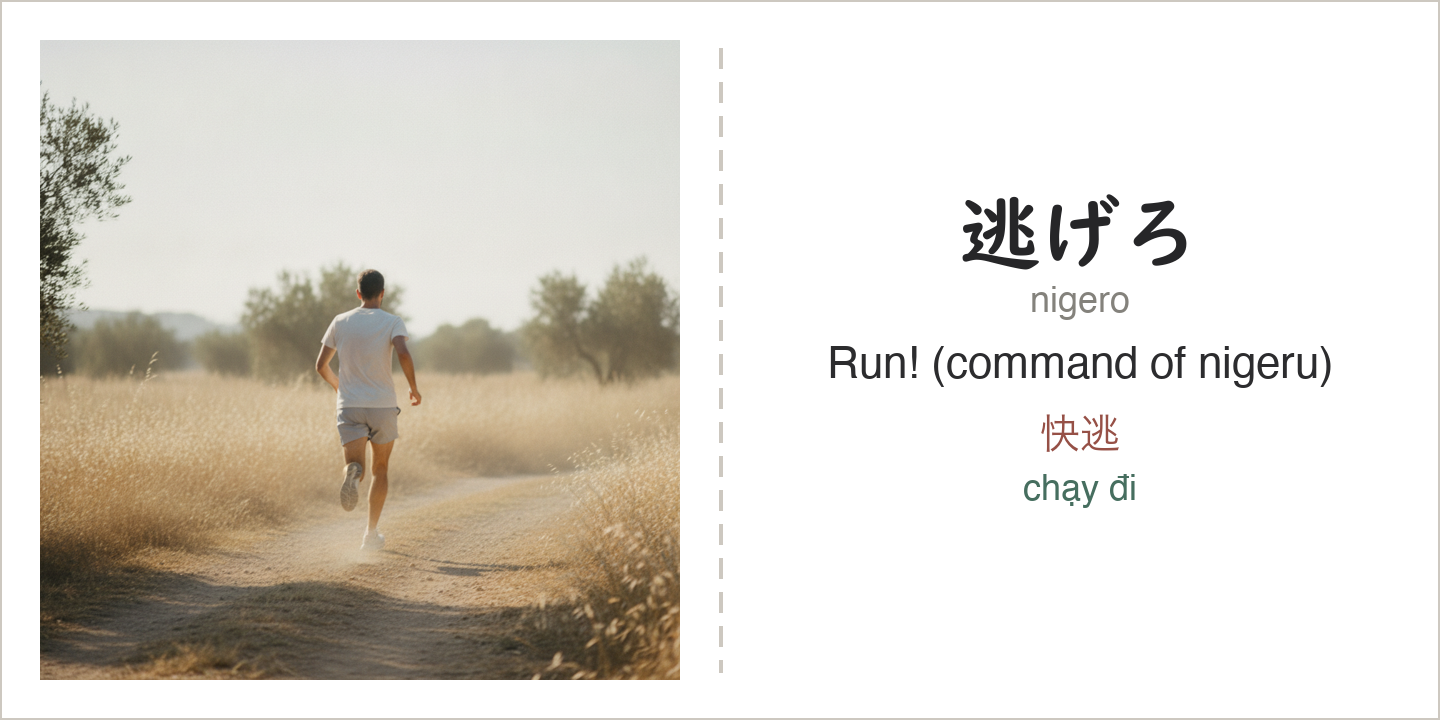
逃げよう。
But running is not quitting. Whatever it costs him, he means to carry this mission on.但是,逃跑不等于放弃。无论失去什么,他都打算把这个任务继续下去。但是,逃跑不等於放棄。無論失去什麼,他都打算把這個任務繼續下去。Nhưng chạy không có nghĩa là bỏ cuộc. Dù mất gì đi nữa, anh vẫn định tiếp tục nhiệm vụ này.
だが、逃げることは やめることでは ない。何を失っても、この任務を続けるつもりだ。
おれは この 任務を 続けようと 思って います。
And when it ends — if it ever ends — he intends to stay in this city.而当一切结束的时候——如果真会结束——他打算留在这座城市。而當一切結束的時候——如果真會結束——他打算留在這座城市。Và khi mọi chuyện kết thúc — nếu có ngày kết thúc — anh định ở lại thành phố này.
そして終わった時 ── もし終わるなら ── 彼は この街に残るつもりだ。
おれは ずっと この 街に 残る つもりです。
The boss, meanwhile, has other plans — a flight to the branch office tomorrow.另一边,上司有别的安排——明天,一班飞往分部的航班。另一邊,上司有別的安排——明天,一班飛往分部的航班。Trong khi đó, cấp trên có kế hoạch khác — ngày mai, một chuyến bay đến chi nhánh.
一方、上司には別の予定がある ── 明日、支店への便。
部長は あした 支店へ 行く 予定です。
Key Sentences
1. 意向形 (volitional — let’s / I’ll)
意向形: volitional form — “let’s” or “I will”, said to yourself or to someone with you.
逃げよう。
- Let’s run. / I’ll get out.
- 逃吧。/ 我要逃。 / 逃吧。/ 我要逃。
- Trốn thôi. / Tôi sẽ trốn.
2. 意向形 + と 思って います (intention)
おれは この 任務を 続けようと 思って います。
- I’m thinking of continuing this mission.
- 我打算继续这个任务。 / 我打算繼續這個任務。
- Tôi định tiếp tục nhiệm vụ này.
3. V-る + つもりです (intention/plan)
おれは ずっと この 街に 残る つもりです。
- I intend to stay in this city for good.
- 我打算一直留在这座城市。 / 我打算一直留在這座城市。
- Tôi định ở lại thành phố này mãi.
4. V-る + 予定です (scheduled plan)
部長は あした 支店へ 行く 予定です。
- The chief is scheduled to go to the branch tomorrow.
- 部长明天预定去分店。 / 部長明天預定去分店。
- Trưởng phòng dự định ngày mai đến chi nhánh.
Practice out loud
Say the answer before you look. The same sentences you just read — now from your own mouth.
どう しましょうか。
逃げよう。
マイクは この 仕事を どう しますか。
この 仕事を 続けようと 思って います。
マイクは 国へ 帰る つもりですか。
いいえ、帰る つもりは ありません。ずっと この 町に 残る つもりです。
部長は あした 何を する 予定ですか。
部長は あした 支店へ 行く 予定です。
週末は 何を する つもりですか。
your own answer
今年 何を しようと 思って いますか。
your own answer
Green — HQ asks you. Blue — Mike answers. Dashed — your turn.
Vocabulary
| 日本語 | English | 简体 | 繁體 | Tiếng Việt |
|---|---|---|---|---|
| 意向形 (〜よう) 逃げよう。 | volitional form Let's run. | 意志形 逃吧。 | 意志形 逃吧。 | thể ý chí Chạy thôi. |
| 〜つもりです ずっと この 町に 残る つもりです。 | intend to ~ I intend to stay in this town for good. | 打算 我打算一直留在这个城市。 | 打算 我打算一直留在這個城市。 | định, dự định Tôi định ở lại thành phố này mãi. |
| 〜予定です 部長は あした 支店へ 行く 予定です。 | be scheduled to ~ The manager is scheduled to go to the branch office tomorrow. | 预定 部长预定明天去分公司。 | 預定 部長預定明天去分公司。 | dự định (lịch) Trưởng phòng dự định ngày mai đi chi nhánh. |
| 逃げます ここからは だれも 逃げられません。 | to run away, escape No one can escape from here. | 逃跑 谁都逃不出这里。 | 逃跑 誰都逃不出這裡。 | chạy trốn Không ai thoát khỏi đây được. |
| 続けます この 任務を 続けようと 思って います。 | to continue I'm thinking of continuing this mission. | 继续 我想继续这个任务。 | 繼續 我想繼續這個任務。 | tiếp tục Tôi định tiếp tục nhiệm vụ này. |
| 残ります わたしは ここに 残ります。 | to remain, stay I will stay here. | 留下 我留在这里。 | 留下 我留在這裡。 | ở lại Tôi sẽ ở lại đây. |
| 任務 任務は まだ 終わって いません。 | mission, duty The mission is not over yet. | 任务 任务还没有结束。 | 任務 任務還沒有結束。 | nhiệm vụ Nhiệm vụ vẫn chưa kết thúc. |
| 支店 支店は 駅の 近くです。 | branch office The branch office is near the station. | 分店 分公司在车站附近。 | 分店 分公司在車站附近。 | chi nhánh Chi nhánh ở gần nhà ga. |
Grammar Patterns
volitional by group; つもり vs 予定.
意向形 (volitional)
Group I: -u → -ou (行く→行こう, 帰る→帰ろう). Group II: -る → -よう (続ける→続けよう). する→しよう, 来る→来よう. Alone = 'let's / I'll' (casual of 〜ましょう).
意向形 + と 思って います
Express an intention you've been holding: 続けようと思っています = I'm thinking of continuing. 〜と思います (just decided) vs 〜と思っています (have been intending).
V-る + つもり / 予定
つもり = personal intention (残るつもりです). 予定 = a fixed schedule/arrangement (行く予定です). 予定 is more objective.
Grammar Picture
- 目標文型this lesson’s pattern这一课的句型這一課的句型mẫu câu của bài này
- 名詞noun名词danh từ
- 述語sentence ending句尾句尾phần cuối câu
〜と思います vs 〜と思っています
- 〜と思います: a decision made now / on the spot.
- 〜と思っています: an intention held for a while.
つもり vs 予定
つもり = subjective intention (may change). 予定 = an arranged, often fixed plan (meetings, flights). Negative intention: 行かないつもりです.
Roleplay Practice
state your plans/intentions.
相棒: これから どう しますか?
(What will you do now?)
マイク: 任務を 続けようと 思って います。
(I'm thinking of continuing the mission.)
相棒: 終わったら?
(And after it's over?)
マイク: この 街に 残る つもりです。
(I intend to stay in this city.)
How do you say this in Japanese?
Q1. The volitional form of 「行く」 is:
- A. 行こう
- B. 行よう
- C. 行きよう
Show answer
✓ A. 行こう (Group I: -u → -ou)
Q2. 「続け___ と 思って います」
- A. よう
- B. る
- C. た
Show answer
✓ A. よう (volitional + と思っています)
Q3. Which is a fixed, objective schedule?
- A. 残るつもりです
- B. 行く予定です
- C. 行こう
Show answer
✓ B. 予定です
Q4. In the story, what does Mike intend to do after it's over?
- A. Leave the country
- B. Stay in this city
- C. Quit immediately
Show answer
✓ B. この街に残るつもり.
Q5. Write your intention with 〜つもりです.
Try 「〜る つもりです」.
Show answer
Sample: らいねん 日本に 行く つもりです。
How to Use This Lesson
Read the sections in the order they appear. About 40 minutes.
Tomorrow, come back and say the Key Sentences again — that is where it sticks.
For Teachers
For Teachers (45-60 minutes in class)
- Volitional drill (15 min): conjugate by group; chant 行こう・食べよう・しよう・来よう.
- つもり vs 予定 (10 min): sort statements into personal intention vs fixed schedule.
- Future-plans interview (10 min): "What do you intend to do this year?"
- Roleplay (15 min): state resolutions and plans.
← Lesson 30 | Midnight Encounter | Lesson 32 →
“Minna no Nihongo” (みんなの日本語) is a textbook series by 3A Corporation. Cinema にほんご is an independent site, not affiliated with or endorsed by 3A Corporation — lesson numbers indicate correspondence only, and no textbook text is reproduced here.