Lesson 33 of 50 · 逃げろ・入るな・〜という意味 · みんなの日本語 第33課 · N4
Story voice: 〜 N3–N2 Japanese — above this lesson’s level, on purpose. Your target is the Key Sentences.
Episode 33: Signs and Shouts
Mini Story
Signs and Shouts.
A burst of movement. No time for polite forms — Mike throws out a single word.突然有了动静。没有时间讲客气话——麦克抛出一个词。突然有了動靜。沒有時間講客氣話——麥克拋出一個詞。Một chuyển động bất ngờ. Không còn thời gian cho lối nói lễ độ — Mike ném ra một từ duy nhất.
突然の動き。丁寧な言い方の時間は ない ── マイクは一つの言葉を投げる。
にげろ!
A steel door, a stenciled warning. He reads it — and ignores it.铁门上,喷印的警告。他读了——然后无视。鐵門上,噴印的警告。他讀了——然後無視。Cánh cửa sắt, một dòng cảnh cáo in khuôn. Anh đọc — rồi phớt lờ.
鉄の扉、描かれた警告。彼は読む ── そして無視する。
かべに「はいるな」と 書いて あります。
On the wall, a strange mark a collaborator scratched in. Mike decodes it for his partner.墙上,有协力者刻下的奇怪记号。麦克解给搭档看。牆上,有協力者刻下的奇怪記號。麥克解給搭檔看。Trên tường, một ký hiệu lạ do người cộng tác khắc lại. Mike giải nghĩa cho cộng sự xem.
壁に、協力者が刻んだ奇妙な印。マイクは相棒に解いてみせる。
この マークは「とまれ」 という 意味です。
And the informant’s last words, before he slipped into the dark.还有,情报贩子消失在黑暗里之前,留下的最后一句话。還有,情報販子消失在黑暗裡之前,留下的最後一句話。Và câu nói cuối cùng của gã chỉ điểm, trước khi hắn lẩn vào bóng tối.
そして、情報屋が闇に消える前の、最後の言葉。
かれは「すぐ 戻る」と 言って いました。
Key Sentences
1. 命令形 (plain command — shout)
命令形: command form — the shortest shape. Used on signs, and when there is no time.
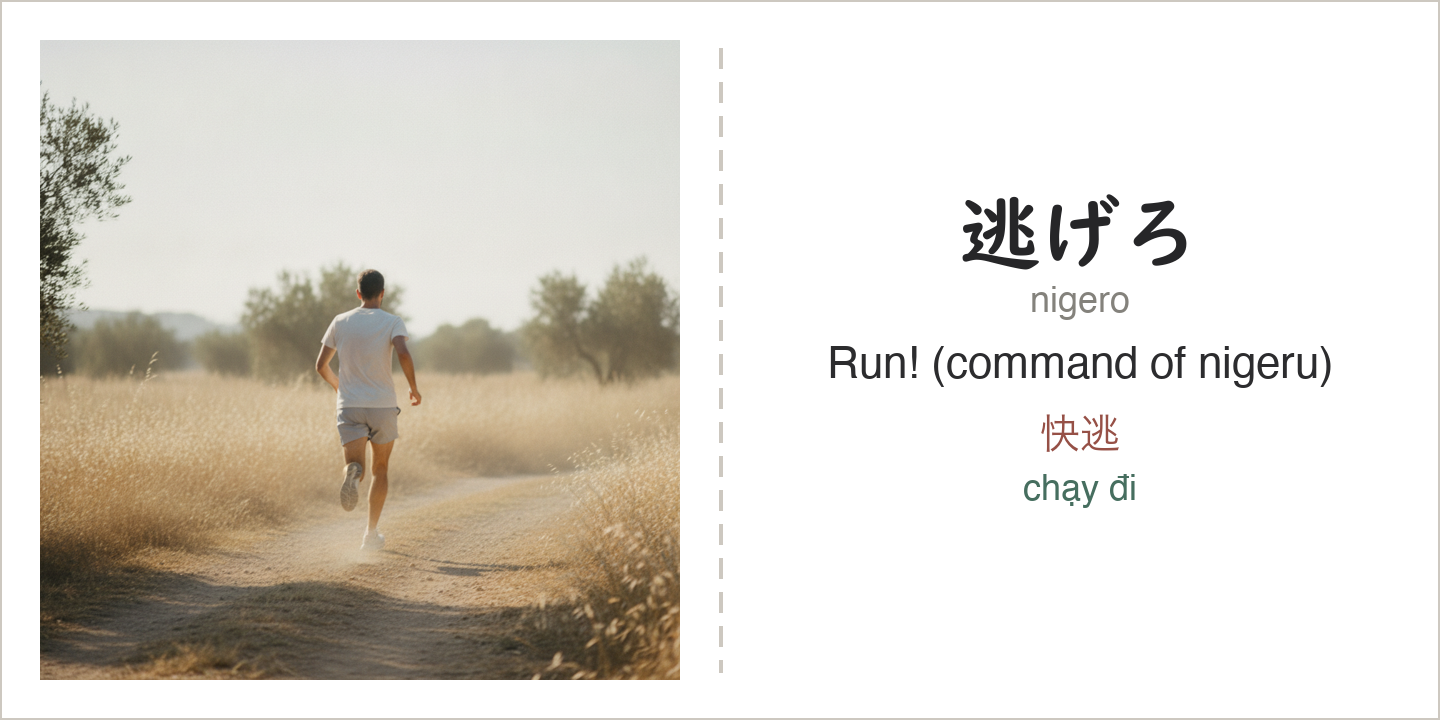
にげろ!
- Run!
- 快逃! / 快逃!
- Chạy đi!
2. 禁止形 (prohibition — 〜な)
禁止形: prohibitive form — “do not”. Also short, also often on signs.
かべに「はいるな」と 書いて あります。
- It says ‘Do not enter’ on the wall.
- 墙上写着「不要进入」。 / 牆上寫著「不要進入」。
- Trên tường viết ‘Không được vào’.
3. 〜という 意味です (X means…)
この マークは「とまれ」 という 意味です。
- This mark means ‘Stop’.
- 这个记号是「停」的意思。 / 這個記號是「停」的意思。
- Dấu này có nghĩa là ‘Dừng lại’.
4. 〜と 言って いました (reported speech)
かれは「すぐ 戻る」と 言って いました。
- He said he’d be right back.
- 他说马上回来。 / 他說馬上回來。
- Anh ấy nói sẽ quay lại ngay.
Practice out loud
Say the answer before you look. The same sentences you just read — now from your own mouth.
危ない とき、何と 言いますか。
「逃げろ!」
壁に 何と 書いて ありますか。
壁に「入るな」と 書いて あります。
この マークは どういう 意味ですか。
この マークは「止まれ」という 意味です。
かれは「もう 帰る」と 言って いましたか。
いいえ、そうは 言って いませんでした。「すぐ 戻る」と 言って いました。
「立入禁止」は どういう 意味ですか。
your own answer
先生は 何と 言って いましたか。
your own answer
Green — HQ asks you. Blue — Mike answers. Dashed — your turn.
Vocabulary
| 日本語 | English | 简体 | 繁體 | Tiếng Việt |
|---|---|---|---|---|
| 命令形 「逃げろ!」と 言いました。 | command form He said, "Run!" | 命令形 他说:「快逃!」 | 命令形 他說:「快逃!」 | thể mệnh lệnh Anh ấy nói: "Chạy đi!" |
| 禁止形 (〜な) 壁に「入るな」と 書いて あります。 | prohibitive form On the wall it says, "Keep out." | 禁止形 墙上写着「不准进入」。 | 禁止形 牆上寫著「不准進入」。 | thể cấm chỉ Trên tường có viết "Cấm vào". |
| 〜という 意味 この マークは「止まれ」という 意味です。 | means ~ (meaning) This mark means "Stop." | ~的意思 这个记号是「停」的意思。 | ~的意思 這個記號是「停」的意思。 | có nghĩa là ~ Ký hiệu này có nghĩa là "Dừng lại". |
| 〜と 言って いました 彼は「すぐ 戻る」と 言って いました。 | (someone) said ~ He said he'd be right back. | (某人)说 他说「马上回来」。 | (某人)說 他說「馬上回來」。 | (ai đó) đã nói Anh ấy đã nói "sẽ quay lại ngay". |
| 逃げろ 危ない、逃げろ。 | Run! (command of 逃げる) Look out — run! | 快逃 危险,快逃! | 快逃 危險,快逃! | chạy đi Nguy hiểm, chạy mau! |
| とまれ 「とまれ」の 印が あります。 | Stop! (command of 止まる) There is a "Stop" sign. | 停 有「停」的标志。 | 停 有「停」的標誌。 | dừng lại Có biển "Dừng lại". |
| 警告 これは 警告です。 | warning This is a warning. | 警告 这是警告。 | 警告 這是警告。 | cảnh báo Đây là cảnh báo. |
| 印 / マーク 地図に 赤い 印が あります。 | mark, sign There is a red mark on the map. | 记号 地图上有红色的记号。 | 記號 地圖上有紅色的記號。 | dấu hiệu Trên bản đồ có một dấu đỏ. |
Grammar Patterns
command/prohibitive by group.
命令形 (command)
Group I: -u → -e (行く→行け, 逃げる is Group II→逃げろ). Group II: -る → -ろ (見る→見ろ). する→しろ, 来る→来い. Strong/rough — signs, emergencies, orders.
禁止形 V-る + な
Add な to the dictionary form = 'Don't ~!'. 入る→入るな, 止まる→止まるな. Common on signs: 「立入禁止」 spoken as 「入るな」.
〜という 意味です / 〜と 言って いました
「X」という意味です explains what something means. 「…」と言っていました reports what someone said (hearsay, vs the direct 〜と言いました of L21).
Grammar Picture
- 目標文型this lesson’s pattern这一课的句型這一課的句型mẫu câu của bài này
- 名詞noun名词danh từ
- 述語sentence ending句尾句尾phần cuối câu
When are command/prohibitive forms used?
Very strong — normally avoided in polite speech. You meet them in: signs, traffic, sports, emergencies, male rough speech, and quoting rules. For requests, use 〜てください instead.
と言いました vs と言っていました
と言いました: reports a single past statement. と言っていました: conveys a message/hearsay you're passing on ('he was saying…'). The ていました form is common for relaying messages.
Roleplay Practice
read a sign, relay a message.
Scene: Reading a sign, relaying a message.
相棒: この マークは 何ですか?
(What does this mark mean?)
マイク: 「とまれ」 という 意味です。動くな!
(It means "Stop." Don't move!)
相棒: 情報屋は?
(And the informant?)
マイク: 「すぐ 戻る」と 言って いました。
(He said he'd be right back.)
How do you say this in Japanese?
Q1. The command form of 「行く」 is:
- A. 行け
- B. 行ろ
- C. 行きろ
Show answer
✓ A. 行け
Q2. 「入る___」 (Don't enter!)
- A. な
- B. ろ
- C. ない
Show answer
✓ A. な (dictionary form + な)
Q3. 「『止まれ』という 意味です」 explains:
- A. what something means
- B. a command to you
- C. a hope
Show answer
✓ A. meaning of the sign.
Q4. In the story, what did the informant say?
- A. He'd be right back
- B. He quit
- C. Don't follow
Show answer
✓ A. 「すぐ戻る」.
Q5. Relay a message with 〜と 言って いました.
Try 「(name)は「…」と 言って いました」.
Show answer
Sample: たなかさんは「あした 来る」と 言って いました。
How to Use This Lesson
Read the sections in the order they appear. About 40 minutes.
Tomorrow, come back and say the Key Sentences again — that is where it sticks.
For Teachers
For Teachers (45-60 minutes in class)
- Form drill (15 min): command & prohibitive by group; note social strength (use sparingly).
- Signs (10 min): real Japanese signs — what do they command/prohibit?
- Message relay (10 min): telephone-game with 〜と言っていました.
- Roleplay (15 min): explain a sign, pass on a message.
← Lesson 32 | Midnight Encounter | Lesson 34 →
“Minna no Nihongo” (みんなの日本語) is a textbook series by 3A Corporation. Cinema にほんご is an independent site, not affiliated with or endorsed by 3A Corporation — lesson numbers indicate correspondence only, and no textbook text is reproduced here.