Lesson 37 of 50 · 褒められます・盗まれます · みんなの日本語 第37課 · N4
Story voice: 〜 N3–N2 Japanese — above this lesson’s level, on purpose. Your target is the Key Sentences.
Episode 37: On the Receiving End
Mini Story
This episode is a little longer — the passive is where the viewpoint flips, and that takes practice.
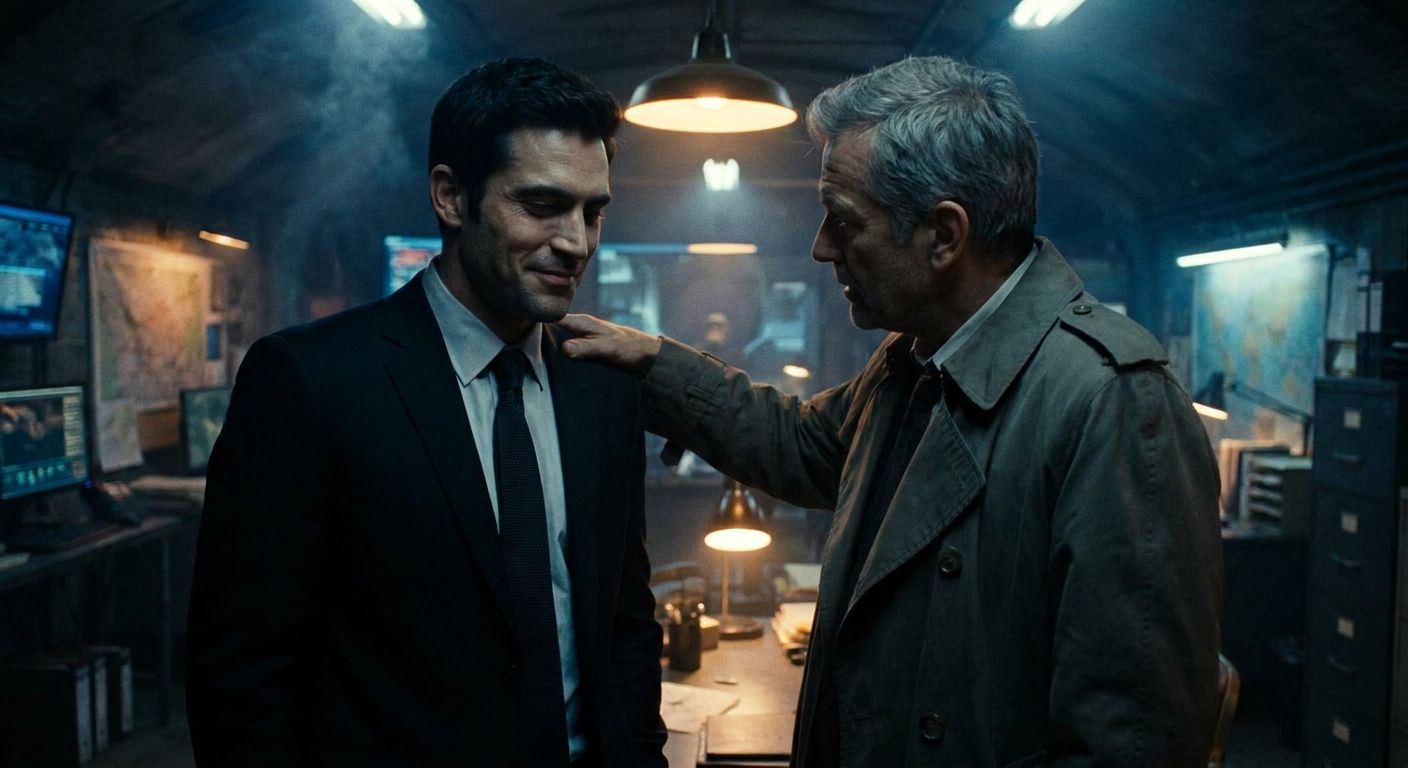
A spy lives on the receiving end of the world. Sometimes, that is a rare word of praise from above.间谍活在世界的承受端。有时候,那是上面难得的一句夸奖。間諜活在世界的承受端。有時候,那是上面難得的一句誇獎。Điệp viên sống ở đầu nhận của thế giới. Đôi khi, đó là một lời khen hiếm hoi từ cấp trên.
スパイは、世界の受ける側に生きる。時には、上からの珍しい一言の褒め言葉。
マイクは ぶちょうに 褒められました。
More often, it is being watched, being doubted, being hunted.更多的时候,是被看、被怀疑、被追。更多的時候,是被看、被懷疑、被追。Thường hơn, đó là bị nhìn, bị nghi, bị săn đuổi.
より多くは、見られ、疑われ、追われること。
マイクは てきに 疑われて います。
And having things taken — sometimes, the thing that mattered most.还有,东西被夺走——有时候,是最重要的那一件。還有,東西被奪走——有時候,是最重要的那一件。Và bị lấy mất — đôi khi, chính là thứ quan trọng nhất.
そして、物を奪われる ── 時には、最も大切な ものを。
だれかに 重要な 書類を 盗まれました。
Even the sky turns its back on him.连天空,都背弃他。連天空,都背棄他。Đến cả bầu trời cũng quay lưng với anh.
空さえ、彼に背く。
とちゅうで あめに 降られました。
The building where it all began will be torn down next month — the evidence, erased.一切开始的那栋楼,下个月就要被拆掉——证据,被抹去。一切開始的那棟樓,下個月就要被拆掉——證據,被抹去。Toà nhà nơi mọi chuyện bắt đầu, tháng sau sẽ bị phá — chứng cứ, bị xoá.
始まりの建物は、来月壊される ── 証拠は消される。
この ビルは らいげつ 壊されます。
That is the spy’s unchanging truth — always, by someone, watched.这就是间谍不变的真相——永远,被某个人,盯着。這就是間諜不變的真相——永遠,被某個人,盯著。Đó là sự thật không đổi của điệp viên — lúc nào cũng vậy, bị ai đó, theo dõi.
それが スパイの変わらぬ真実 ── いつも、誰かに、見張られている。
マイクは いつも だれかに 見張られて います。
Key Sentences
1. 直接受身 (was praised by someone)
受身: passive — the sentence turns around to face the person it happened to.
マイクは ぶちょうに 褒められました。
- Mike was praised by the chief.
- 麦克被部长表扬了。 / 麥克被部長表揚了。
- Mike được trưởng phòng khen.
2. 直接受身・継続 (is being suspected)
マイクは てきに 疑われて います。
- Mike is being suspected by the enemy.
- 麦克被敌人怀疑着。 / 麥克被敵人懷疑著。
- Mike đang bị kẻ địch nghi ngờ.
3. 被害の受身 (had something stolen)
だれかに 重要な 書類を 盗まれました。
- He had important documents stolen by someone.
- 他被人偷走了重要文件。 / 他被人偷走了重要文件。
- Anh ấy bị ai đó lấy mất tài liệu quan trọng.
4. 迷惑の受身 (got rained on — adversity)
とちゅうで あめに 降られました。
- He got rained on along the way.
- 途中被雨淋了。 / 途中被雨淋了。
- Đi giữa đường thì bị mưa.
5. 物の受身 (the building will be demolished)
この ビルは らいげつ 壊されます。
- This building will be demolished next month.
- 这栋楼下个月会被拆。 / 這棟樓下個月會被拆。
- Tòa nhà này tháng sau sẽ bị phá.
6. 直接受身・継続 (is always being watched)
マイクは いつも だれかに 見張られて います。
- Mike is always being watched by someone.
- 麦克总是被某人监视着。 / 麥克總是被某人監視著。
- Mike luôn bị ai đó theo dõi.
Practice out loud
Say the answer before you look. The same sentences you just read — now from your own mouth.
マイクは 部長に 褒められましたか。
はい、部長に 褒められました。
マイクは 部長に しかられましたか。
いいえ、しかられませんでした。褒められました。
だれかに 何を 盗まれましたか。
だれかに 大切な 書類を 盗まれました。
途中で どう しましたか。
途中で 雨に 降られました。
この ビルは どうなりますか。
この ビルは 来月 壊されます。
だれかに 褒められた ことが ありますか。
your own answer
何か 盗まれた ことが ありますか。
your own answer
Green — HQ asks you. Blue — Mike answers. Dashed — your turn.
Vocabulary
| 日本語 | English | 简体 | 繁體 | Tiếng Việt |
|---|---|---|---|---|
| 受身(うけみ) マイクは 部長に 褒められました。 | passive form Mike was praised by the manager. | 被动 麦克被部长表扬了。 | 被動 麥克被部長稱讚了。 | thể bị động Mike được trưởng phòng khen. |
| 〜に(受身) だれかに 書類を 盗まれました。 | by (the agent) My documents were stolen by someone. | 被… 文件被人偷了。 | 被… 文件被人偷了。 | bởi Giấy tờ bị ai đó lấy trộm. |
| 褒められます いい 写真だと 褒められました。 | to be praised (← 褒める) I was told my photos were good. | 被表扬 有人夸我照片拍得好。 | 被表揚 有人誇我照片拍得好。 | được khen Tôi được khen là ảnh chụp đẹp. |
| 疑われます マイクは 敵に 疑われて います。 | to be suspected (← 疑う) Mike is suspected by the enemy. | 被怀疑 麦克正被敌人怀疑。 | 被懷疑 麥克正被敵人懷疑。 | bị nghi ngờ Mike đang bị kẻ địch nghi ngờ. |
| 盗まれます 大切な 鍵を 盗まれました。 | to be stolen (← 盗む) My important key was stolen. | 被偷 重要的钥匙被偷了。 | 被偷 重要的鑰匙被偷了。 | bị trộm Chiếc chìa khóa quan trọng đã bị lấy trộm. |
| 降られます 途中で 雨に 降られました。 | to be rained on (← 降る) I got caught in the rain on the way. | 被(雨)淋 半路上被雨淋了。 | 被(雨)淋 半路上被雨淋了。 | bị mưa (ướt) Giữa đường tôi bị mắc mưa. |
| 壊されます この ビルは 来月 壊されます。 | to be destroyed (← 壊す) This building will be torn down next month. | 被拆/破坏 这栋楼下个月要被拆掉。 | 被拆/破壞 這棟樓下個月要被拆掉。 | bị phá Toà nhà này tháng sau sẽ bị phá. |
| 見張られます いつも だれかに 見張られて います。 | to be watched (← 見張る) I'm always being watched by someone. | 被监视 总是被什么人盯着。 | 被監視 總是被什麼人盯著。 | bị theo dõi Lúc nào cũng bị ai đó theo dõi. |
Grammar Patterns
受身の作り方 (passive form)
Group I: -u → -areru (盗む→盗まれる, 疑う→疑われる). Group II: -る → -られる (褒める→褒められる, 見張る is Group I→見張られる). する→される, 来る→来られる.
〜は 〜に 〜(ら)れる (direct passive)
The receiver is the topic (は); the doer is marked with に. 部長が マイクを褒める → マイクは 部長に 褒められる.
迷惑・被害の受身 (adversity)
Japanese can make a passive even from intransitive verbs (雨に降られる) or for things taken from you (書類を盗まれる), to express that you were affected / troubled. This has no direct English equivalent.
物が主語の受身 (no agent)
When the doer is unknown/unimportant, the thing becomes the subject and the agent is dropped: ビルが 壊される, 車が 輸出される.
Grammar Picture
- 目標文型this lesson’s pattern这一课的句型這一課的句型mẫu câu của bài này
- 名詞noun名词danh từ
- 述語sentence ending句尾句尾phần cuối câu
★ The big idea — whose viewpoint?
Passive tells the story from the receiver's side. Same event, two views: 「先生が ほめる」 (teacher praises) vs 「私は 先生に ほめられる」 (I am praised by the teacher). The doer becomes に.
★ 迷惑の受身 — the "suffering" passive
Uniquely Japanese: even when no one targets you, you can use passive to show you were troubled.
- 雨に 降られました。= I got rained on (and it was a problem).
- 子どもに 泣かれました。= The child cried on me (to my distress).
★ Possessor's passive — 〜に 〜を 〜(ら)れる
When something of yours is acted on: 「(私は) だれかに 書類を 盗まれました」 = I had my documents stolen. You (は) + doer (に) + thing (を) + passive verb.
視点転換 ── active → passive (the core)
| する側 (active) | → される側 (passive) |
|---|---|
| 部長が マイクを 褒める | マイクは 部長に 褒められる |
| 敵が マイクを 疑う | マイクは 敵に 疑われる |
| 誰かが 書類を 盗む | (マイクは) 書類を 盗まれる |
| 雨が 降る | (マイクは) 雨に 降られる |
| 誰かが ビルを 壊す | ビルが 壊される |
受身=「される側」 から世界を語り直す。マイクは追う側であり、同時に 追われ・疑われ・見張られる側でもある ── それが受身のドラマ。
Roleplay Practice
相棒: どう しましたか?
(What happened?)
マイク: だれかに 書類を 盗まれました。
(I had documents stolen by someone.)
相棒: 敵に 疑われて いますか?
(Are you being suspected by the enemy?)
マイク: はい。いつも 見張られて います。気を つけて。
(Yes. I'm always being watched. Be careful.)
How do you say this in Japanese?
Q1. The passive of 「盗む」 is:
- A. 盗まれる
- B. 盗められる
- C. 盗まされる
Show answer
✓ A. 盗まれる (Group I: -u→-areru)
Q2. 「マイクは 部長 ___ 褒められました」 (the doer particle)
- A. が
- B. に
- C. を
Show answer
✓ B. に — the doer takes に in the passive.
Q3. 「雨に 降られました」 expresses:
- A. plain fact about rain
- B. that the rain troubled the speaker
- C. the speaker made it rain
Show answer
✓ B. the suffering passive.
Q4. 「ビルが 壊されます」 — why is the agent dropped?
- A. The doer is unknown/unimportant
- B. It's a mistake
- C. Buildings can't be passive
Show answer
✓ A. Thing-subject passive often omits the agent.
Q5. Turn "誰かが 私の かばんを 取る" into a (suffering) passive about 私.
Try 「私は だれかに 〜を 〜られました」.
Show answer
私は だれかに かばんを 取られました。
How to Use This Lesson
For Self-Study (45-50 minutes)
- Read Grammar Patterns (8 min) — passive forms by group; the に agent; suffering passive.
- Study the 視点転換 table (5 min) — feel the viewpoint flip.
- Practice Key Sentences (12 min) — all six types.
- Learn Vocabulary (10 min).
- Read Mini Story (5 min) — On the Receiving End.
- Roleplay + Review tomorrow.
For Teachers (click to expand)
For Teachers (45-60 minutes in class)
- Why thick? Passive demands a viewpoint flip plus a new form — a classic stumbling point. Budget extra time.
- Form drill (15 min): conjugate to passive by group; drill する→される, 来る→来られる.
- Viewpoint flip (10 min): convert active↔passive with the 視点転換 table; stress doer→に.
- Suffering passive (10 min): 雨に降られる, 泣かれる — the affected-person nuance — the sentence says who it happened to.
- Roleplay (15 min): report misfortunes (something stolen, watched, rained on).
← Lesson 36 | Midnight Encounter | Lesson 38 →
“Minna no Nihongo” (みんなの日本語) is a textbook series by 3A Corporation. Cinema にほんご is an independent site, not affiliated with or endorsed by 3A Corporation — lesson numbers indicate correspondence only, and no textbook text is reproduced here.